First check the pump has power and that its timer is set to run when you use hot water; a power cut can reset the clock. Then check the far-end valve or return line: a stuck crossover valve or check valve stops circulation. Scale or air also cut flow. A lukewarm cold tap is normal on systems that use the cold line as the return.
Know which kind of system you have
There are two common layouts. Homes built with a dedicated hot-water return line run a small bronze or stainless circulator, often under a timer or aquastat, that pushes water around the loop and back to the heater. Homes without a return line use a crossover system instead. Grundfos's Comfort System is an example: a pump at the water heater and a Comfort Valve under the fixture farthest from the tank, which lets hot water flow back through the cold-water line until it warms to 100 °F and then closes.
Troubleshooting differs between them. In a return-line system the check valve and the return piping matter most; in a crossover system the under-sink valve is the usual suspect. The Grundfos Comfort System 595916 kit is sold with both pump and valve.
| Item | Comfort System | UP 10 comfort pump |
|---|---|---|
| Power | 25 W, 115 V, 0.23 A | 25 W, 115 V |
| Liquid temperature | 36 °F to 150 °F | 36 °F to 203 °F |
| Control | Built-in timer; valve closes near 100 °F | 24-hour timer in 15 minute steps; aquastat options 95 °F to 150 °F |
| Suggested water temperature | About 140 °F to limit scale | About 140 °F to limit scale |
Figures: Grundfos UP series circulator data booklet, Comfort System and UP 10 pages.
Is the pump actually running?
Put a hand on the pump body when it should be running. A faint vibration means it is turning. If it is still, check the outlet, then the timer. Many recirculation pumps, including the Laing AutoCirc and the Comfort System, run on built-in timers, and a power cut or daylight saving change can leave the clock running at the wrong time of day. Reset the clock and the on periods to match when the household uses hot water.
If the pump has an aquastat, it stops once the loop reaches its set temperature. The UP 10 comfort pump offers aquastat settings between 95 °F and 150 °F; set too low, it switches off before hot water reaches the far tap. A pump with power, a correct timer and no movement may be seized by scale or have failed.
- Confirm the outlet is live and the pump is plugged in.
- Reset the timer clock to the current time of day.
- Set on periods to cover morning and evening use.
- Check any aquastat is not set below the delivery temperature you want.
- Feel for vibration on the pump body during an on period.
Running but hot water still takes too long
When the pump runs and the wait has not improved, water is not completing the loop. In a crossover system, sediment can hold the under-sink valve shut, or the valve may have been fitted at a fixture other than the farthest one. In a return-line system, a check valve stuck closed, a closed isolation valve or air trapped at a high point stops flow. Bleed air where you can, open every valve and inspect the check valve.
Scale is a slow cause. Grundfos recommends keeping the water heater around 140 °F to avoid calcium precipitation, because scale builds in the pump and valve faster at higher temperatures. Multi-speed pumps can also be set too low for a long loop; try the next speed up before replacing parts.
Lukewarm cold water, noise and condensation
A cold tap that runs warm for a few seconds is normal on a crossover system, because the cold line is carrying hot water back to the heater. Shorter timer periods reduce it. If the cold tap runs hot for a long time, the crossover valve may be stuck open.
Noise is usually air or cavitation. Grundfos sets minimum inlet pressures for its UP pumps to avoid cavitation noise and bearing damage at higher temperatures. Also check the pump's mounting: Grundfos requires the motor shaft horizontal and notes that the room air should be cooler than the water, or condensation can form in the stator housing.
When to replace the pump
A pump that has power, a correct timer and clear valves but still does not move water has usually worn out or seized. Match the replacement to the system: a crossover kit for homes without a return line, or a bronze or stainless circulator for a dedicated loop. Options include the Laing AutoCirc and the under-sink A. O. Smith APCOM UT1. The installation guide linked below covers fitting either type.
Before buying, note whether the old unit had a timer, an aquastat or both, and where the valve or return line connects. Replacing like with like avoids replumbing, and keeps any timer schedule the household is already used to.
Common mistakes
- Assuming the pump failed when a power cut reset its timer.
- Fitting the crossover valve at a fixture near the heater.
- Setting the aquastat below the temperature you want at the tap.
- Running the water heater hot enough to scale the pump quickly.
- Using a cast iron circulator on drinking water.
Products that fit
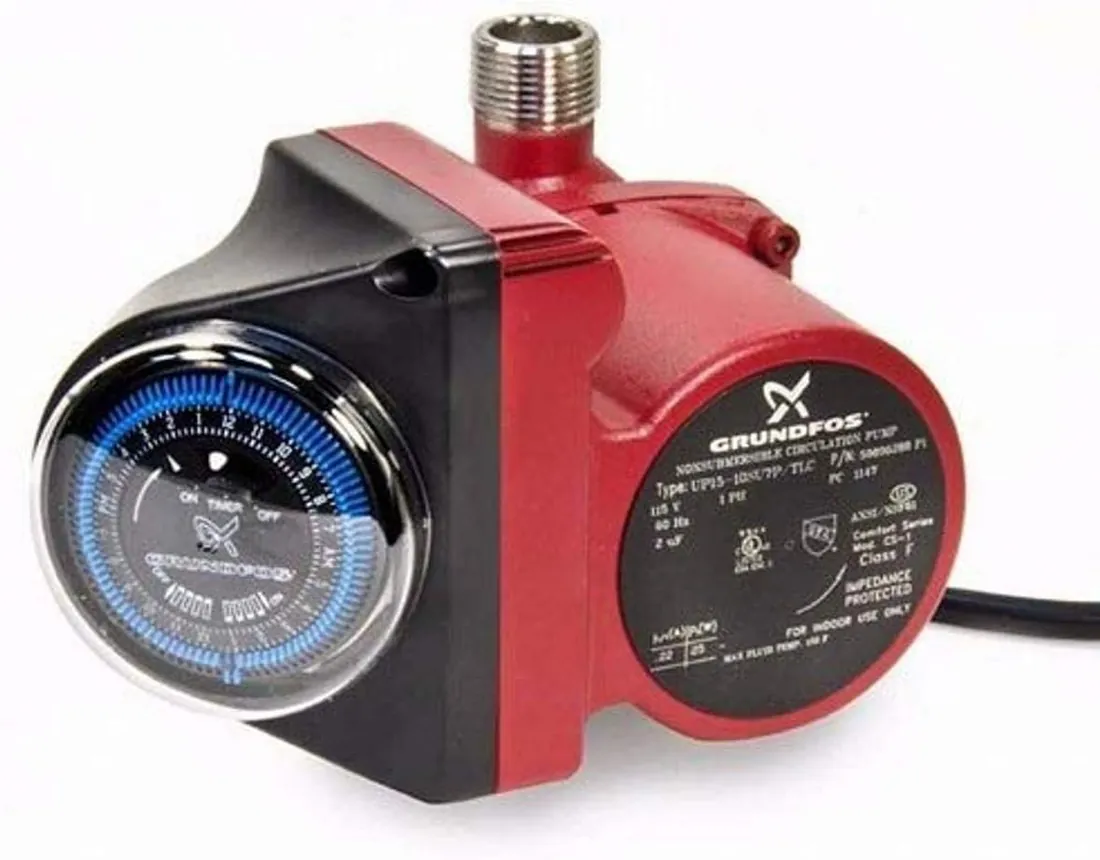
Grundfos Comfort System 595916 Recirculation Pump Kit
Crossover kit with a timed pump and an under-sink Comfort Valve.
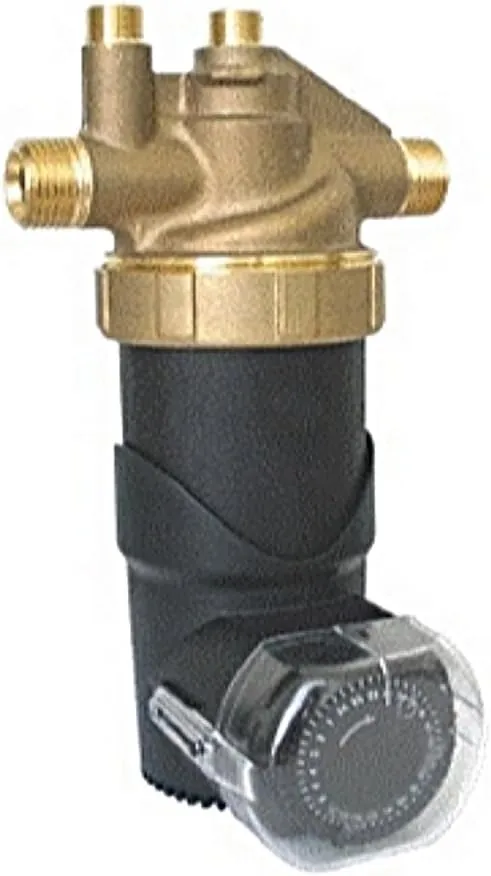
Laing AutoCirc LHB08100092 Recirculation Pump
Laing AutoCirc recirculation pump with a built-in timer, for 115 V.
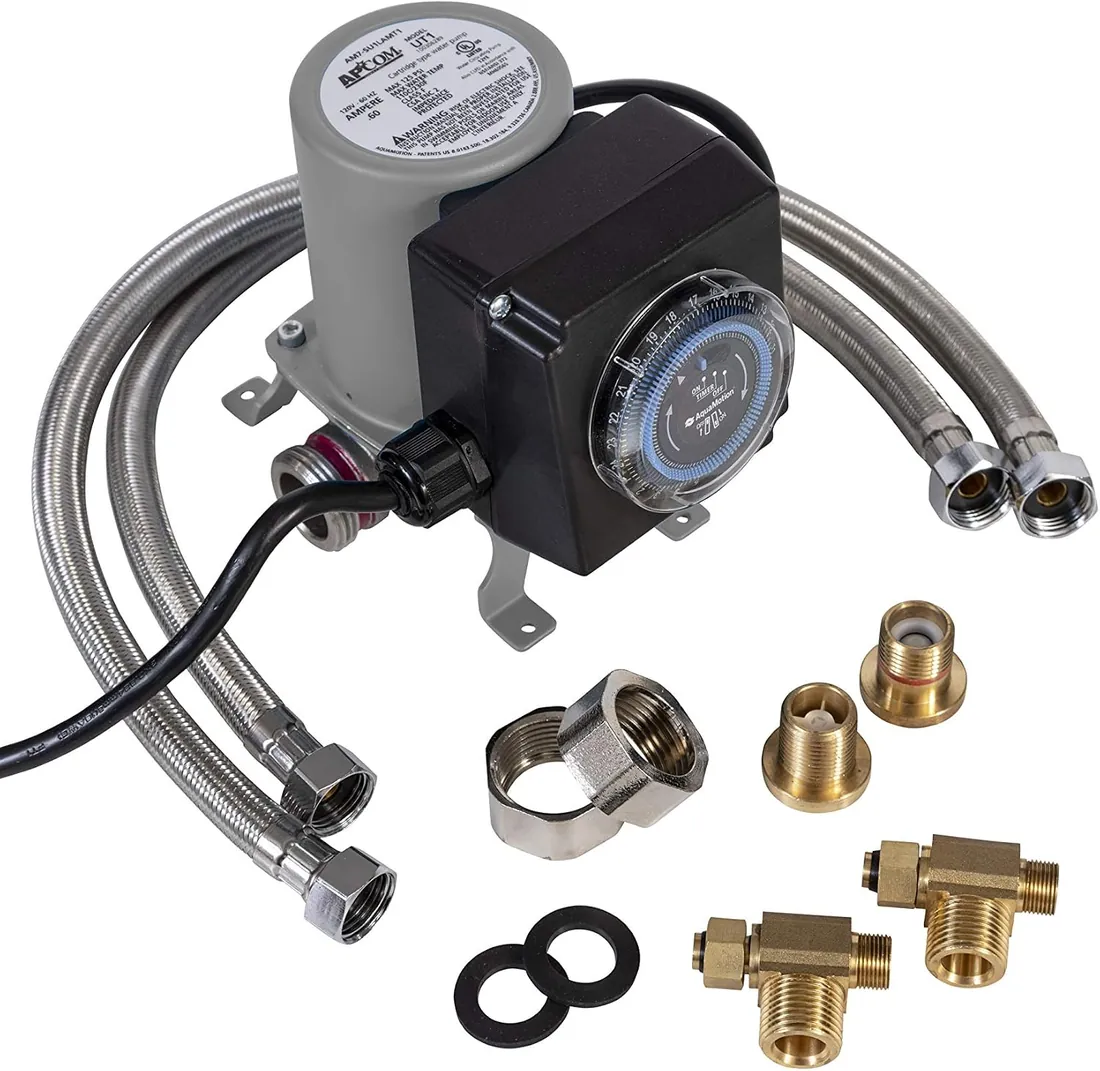
A. O. Smith APCOM UT1 Recirculation Pump
Under-sink recirculation pump intended for homes with tank-type water heaters.
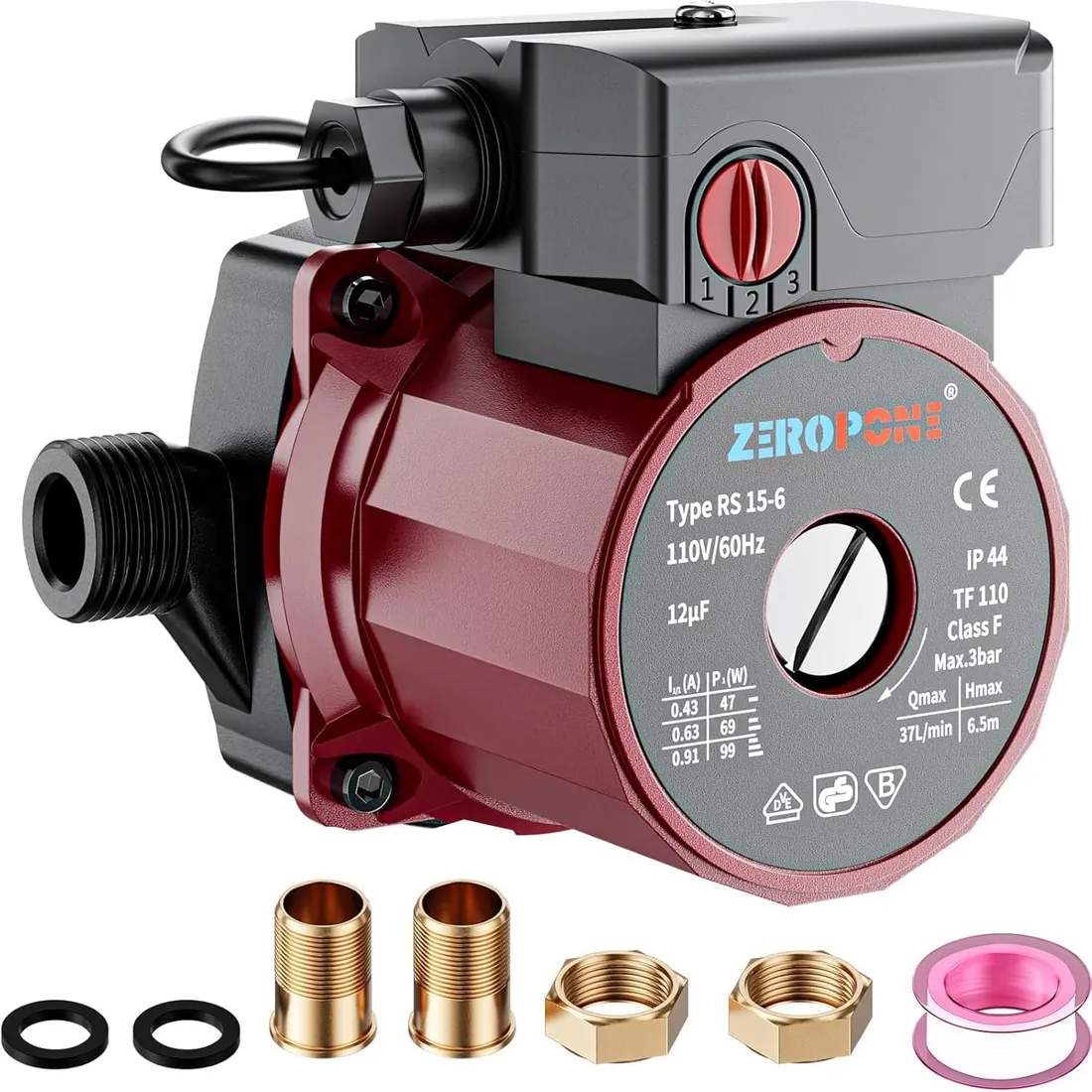
ZeroPone ZPHWCP003 93W Recirculating Pump
Cast iron recirculating pump listed at 93 W for electric heater systems.
Questions readers ask
Why is my hot water recirculation pump not working?
Most often the timer is off or set wrong after a power cut, the pump is unplugged, or the far-end valve or check valve is stuck. Scale and air in the line also stop circulation. Check those before replacing the pump.
Why is my cold water warm with a recirculation pump?
On crossover systems the cold line carries hot water back to the heater, so it warms. That is normal for a few seconds. If it stays hot, the crossover valve may be stuck open.
What temperature should a recirculation system run at?
Grundfos suggests keeping the operating temperature around 140 °F to limit calcium buildup in the pump and valve. Higher temperatures scale faster, so turning a very hot heater down also helps the pump last longer.
Should a recirculation pump run all the time?
It can, but timers and aquastats save energy and reduce scaling. Grundfos's comfort pumps offer a 24-hour timer in 15 minute steps, so the pump runs only when the household normally uses hot water.