First confirm the circulator is being told to run: the thermostat calls, the boiler control or zone relay sends power, and the breaker is on. If it has power but does not turn, the rotor may be stuck after sitting idle. If it runs but heat does not move, look for air, low pressure, a closed valve or a low speed setting.
How a wet-rotor circulator works
Grundfos describes its UP and UPS circulators as wet-rotor pumps: the pump and motor form one unit with no shaft seal, and the bearings are lubricated by the water being pumped. That design is quiet and needs no oiling, but it has two consequences for troubleshooting. The pump must never run without water, and anything in the water, such as scale or sludge, ends up in the bearings.
Circulators for closed heating systems usually have cast iron housings, such as the Grundfos UPS15-58FC and Taco 007-F5, while bronze or stainless steel housings are used for potable hot water. The motors carry their own thermal or impedance protection, so Grundfos says no external motor protection is needed.
| Item | Value |
|---|---|
| Liquid temperature range | 36 °F to 230 °F |
| Maximum system pressure | 145 psi |
| Motor size range | 1/25 to 1/6 hp |
| UPS15-58FC speeds | 3, at 60, 80 and 89 W |
Figures: Grundfos UP series circulator data booklet, 60 Hz; Grundfos UPS15-58FC product data.
Not running: start with the power path
A circulator does not decide when to run; the boiler control, a zone relay or an aquastat switches it. Before blaming the pump, find out whether power is reaching it during a heat call. Turn the thermostat up, then with the cover off the relay or control, have a qualified person check for line voltage at the circulator terminals. No voltage points upstream: a tripped breaker, a failed relay or a control that is not calling.
If the circulator has power and does nothing at all, the motor or its capacitor may have failed. On the UPS15-58FC Grundfos lists a 10 mF capacitor on high speed. On a multi-speed UPS pump, also check the speed selector on the terminal box has not been knocked to its lowest setting.
- Raise the thermostat so the zone calls for heat.
- Check the breaker or service switch for the boiler.
- Confirm the zone relay or control powers the circulator terminals.
- Feel the pump body: a warm, silent pump with power may be stuck.
- Check the speed setting on multi-speed models.
Humming or warm but not turning
Wet-rotor circulators often stick after a summer off, when minerals or sludge settle around the rotor. The motor hums or warms but the rotor does not spin. Some models have a slotted plug or shaft end on the motor face for freeing the rotor; follow the specific pump's instructions, and isolate and depressurize the pump first, because the system is under pressure and the water can be hot.
A pump that sticks every autumn, or that frees and stops again, usually has worn bearings or a dirty system. Since the bearings run in the system water, cleaning or treating the water helps the replacement last. Note the old pump's model and speed before removing it, so the new one moves a similar amount of water through the same piping.
Running but the heat does not move
When the circulator runs and the boiler is hot but radiators stay cold, the water is not flowing through the loop. Air trapped at high points, a closed isolation valve, a flow check stuck shut or a zone valve that has not opened all produce this symptom. Bleed radiators and purge the zone, open every valve, and check the system pressure gauge: a system too low on pressure cannot push water to the top floor.
Pressure also matters for the pump itself. Grundfos sets a minimum inlet pressure that rises with water temperature, to avoid cavitation noise and bearing damage at high temperatures. In a system open to the atmosphere, that means the pump must sit far enough below the lowest water level.
Noise, condensation and installation errors
A gravelly or rattling sound at startup is usually air or cavitation from low inlet pressure. A constant hum through the pipes may mean the speed is set higher than the system needs; Grundfos notes that its three-speed UPS15-58FC reduces noise and power use at lower speeds.
Check the mounting too. Grundfos requires the motor shaft to be horizontal, with the terminal box to one side and the conduit entry facing down; the pump itself can sit in a vertical or horizontal pipe. It also warns that the surrounding air must stay cooler than the water, otherwise condensation can form in the stator housing, which matters for circulators on chilled water. For replacements, see the circulator and booster category.
Common mistakes
- Replacing the circulator when the zone relay never sent it power.
- Running a wet-rotor pump on a drained system to test it.
- Mounting the pump with its motor shaft vertical.
- Ignoring low pressure on the boiler gauge after bleeding radiators.
- Freeing a stuck rotor without isolating and depressurizing the pump.
Products that fit
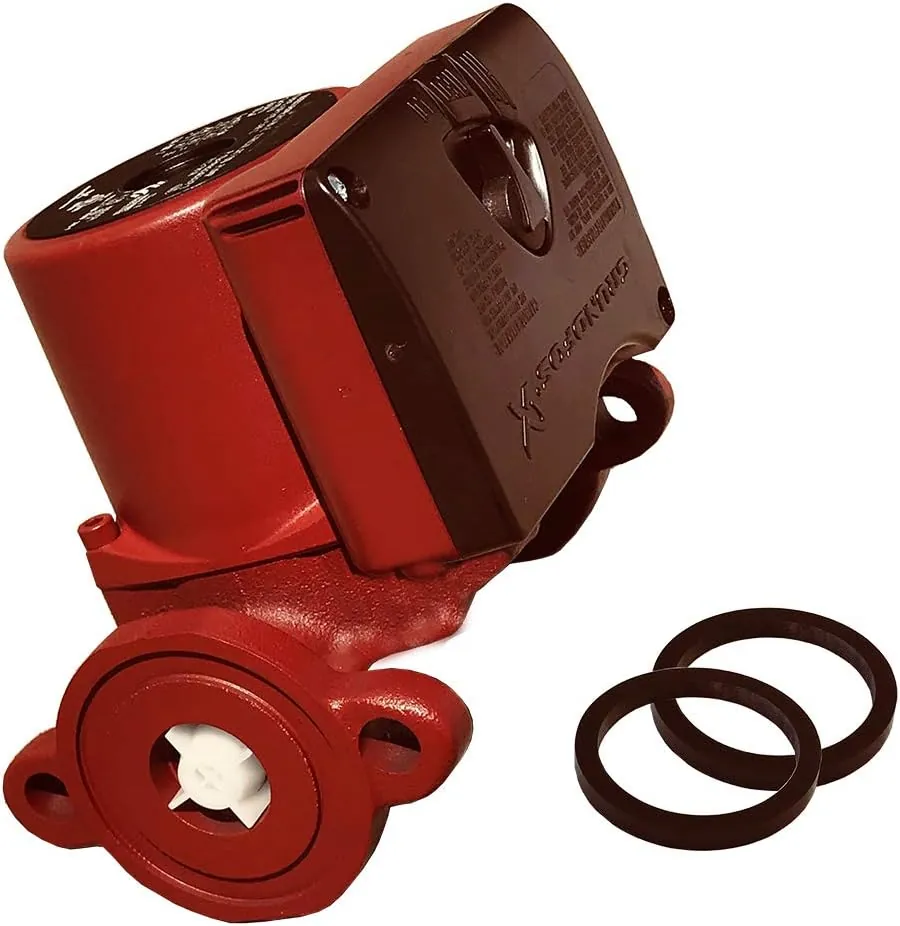
Grundfos UPS15-58FC Circulator Pump
Three-speed cast iron circulator with a removable integrated check valve.
Taco 007-F5 Cast Iron Circulator
Cast iron 1/25 HP circulator commonly found on residential hydronic boilers.
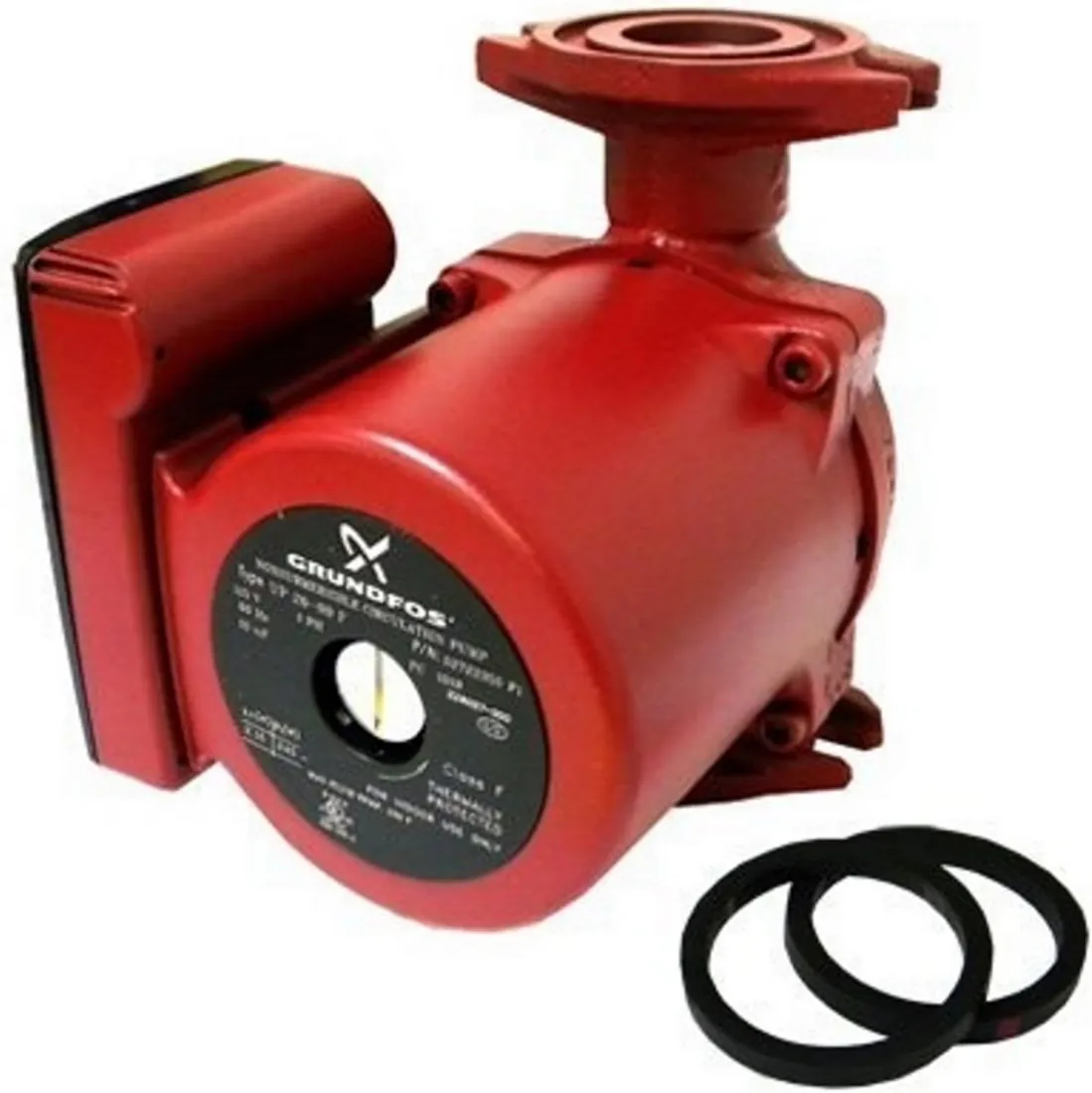
Grundfos UP15-42F SuperBrute Circulator
Single-speed Grundfos cast iron circulator from the long-running UP series.
Questions readers ask
How do I know if my boiler circulator pump is bad?
If it has power during a heat call but does not run, or hums without turning after the rotor is freed, the motor or capacitor has likely failed. If it runs but heat does not circulate, check for air, low pressure or closed valves before replacing it.
Why is my circulator pump making noise?
Air in the system and low inlet pressure are the usual causes. Grundfos sets minimum inlet pressures to prevent cavitation noise. A speed set higher than the system needs can also hum through the pipes.
Can a circulator pump run dry?
No. The bearings of a wet-rotor circulator are lubricated by the pumped water, so running without water damages them quickly. Refill, pressurize and purge the system before starting the pump.
Which way should a circulator pump be installed?
Grundfos requires the motor shaft to be horizontal, with the terminal box at the side and the conduit entry down. The pump can be in either a vertical or horizontal pipe, with flow in the direction of the arrow on the housing.