Put the pit at the lowest point of the crawl space, where standing water collects or where the drain tile and vapor barrier slope to. Use a lidded basin, a compact automatic pump with a vertical float, a GFCI outlet within cord reach and a rigid discharge pipe that leaves the house and drains away from the foundation. Most crawl spaces need only a 1/3 HP pump or smaller.
Do you need a sump pump in a crawl space?
A crawl space needs a pump when water stands on the ground or the vapor barrier after rain, when the soil stays wet between storms, or when a drain tile system has been installed around the footings and needs somewhere to empty. Water under a house raises humidity, feeds mold and rot, and works against any dehumidifier you run there. If the space only gets damp air, a pump will not help; that is a vapor barrier and ventilation problem.
Pump makers do treat crawl spaces as normal territory. Red Lion describes its pedestal pump as built for residential sump pits in basements and crawl spaces, and Little Giant's compact basin systems are sold for areas where ordinary drainage is impractical. The rules that matter are the same as in a basement: the pump must be indoors and protected, the switch must move freely and the water must leave the house.
Where to put the pit
Water runs downhill, so the pit belongs at the lowest point of the crawl space. Walk the space after a heavy rain and look for the area that ponds first. If a contractor has laid drain tile or a dimpled membrane, the pit goes where those lines are sloped to meet. Placing it there means the pump does the work instead of the water sitting in low spots it cannot reach.
Two practical limits shape the final spot. You need a grounded GFCI outlet within reach of the pump cord, because Wayne, Zoeller and Star all forbid extension cords on sump pumps. And you need a short, direct path for the discharge pipe to leave through the rim joist or foundation wall. A pit beside the access hatch also makes yearly checks far easier.
- Find the lowest point where water ponds after rain.
- Check there is a GFCI outlet within cord reach, or have one added.
- Dig the hole for the basin and set it on a firm, level bottom.
- Bed the basin in washed stone, not sand or native soil.
- Set the pump on a solid base inside the basin with the float clear.
- Run rigid pipe with a check valve out through the wall.
How big and deep the pit should be
Crawl spaces rarely have room for a deep pit, but the pump still needs enough depth for its switch. Wayne's manual asks for a basin at least 11 in across and 22 in tall for its vertical-float pumps. Liberty recommends a sump of at least 14 in across and 18 in deep for ordinary groundwater, while allowing its vertical-float models in a 10 in pit. Star wants at least 12 in across and 18 in deep for its column pumps.
Liberty's installation manual also gives sound advice for digging a new sump: keep the hole small, leave clearance around the basin, bed it in fine pea gravel or washed crushed stone rather than sand or soil, and give the basin a hard, level bottom so the pump does not sit in mud.
Which pump fits a crawl space
Crawl space inflow is usually modest, so a small automatic pump is enough. What matters more is a switch that cannot snag in a tight basin and a body short enough to fit. Vertical floats and diaphragm switches suit this better than a swinging tethered float.
The Superior 92372 is a light thermoplastic 1/3 HP pump with a piggyback vertical float that switches on at 6.5 in and off at 2 in. The Little Giant Compact Sump Pump Basin System comes as a ready-made 3.5 gallon basin with a 1/3 HP pump and diaphragm switch, useful where digging a full pit is not practical. For pits wide enough, a pedestal pump such as the Red Lion RL-SP33PED keeps its motor above the water.
| Pump | Power | Switch | On / off level | Flow |
|---|---|---|---|---|
| Superior 92372 | 1/3 HP | Piggyback vertical float | 6.5 in / 2 in | 2,400 GPH at 10 ft |
| Little Giant WRSC-6 compact system | 1/3 HP | Integral diaphragm | 4-7 in / 1-3 in | 29 GPM at 10 ft |
| Red Lion RL-SP33PED | 1/3 HP | Snap-action rod float | 9-11 in / 3-5 in | 2,040 GPH at 10 ft |
Figures: Superior Pump 92372 product page; Little Giant WRS series spec sheet 996567; Red Lion pedestal pump product page, RL-SP33PED.
Routing the discharge out of the crawl space
The discharge line is where crawl space installs most often go wrong. Wayne requires rigid PVC pipe, not flexible hose, on permanent installs, along with a check valve. Its manual asks that the water be carried at least 3 ft from the foundation, and that any section exposed to freezing slope downward away from the house so it drains between cycles. Liberty adds that plumbing should sit below the frost line where possible.
Do not let the pipe end just outside the vent opening or under the house. Water dumped beside the foundation finds its way straight back into the crawl space. Carry it to a splash block, a downspout extension or a drainage area that slopes away. If the line freezes, Liberty lists ice in the discharge as a cause of a pump that runs without pumping.
Cold, dehumidifiers and checking on the pump
A vented crawl space can get cold in winter. Wayne's pumps are intended for indoor use only and its manual warns that water left in the pump can freeze and damage it; Star says the same about freezing damage and its warranty. Insulate or seal the space if it drops near freezing.
Many owners drain a crawl space dehumidifier into the sump pit, which is fine as long as the pump can handle the extra cycles. For sink or dehumidifier water alone, a small sealed drain system such as the Liberty 404, only 11 in tall, may fit better than a full sump. Because nobody sees a crawl space pump fail, add a high-water alarm, and pour water into the pit at least every three months as Star's instructions ask.
Common mistakes
- Placing the pit where it is easy to dig rather than at the lowest point.
- Running the pump on an extension cord from a distant outlet.
- Ending the discharge pipe right beside the foundation or under the house.
- Using flexible hose that kinks, freezes or lets the pump shift.
- Choosing a tethered float for a narrow crawl space basin.
- Forgetting an alarm on a pump nobody sees for months.
Products that fit
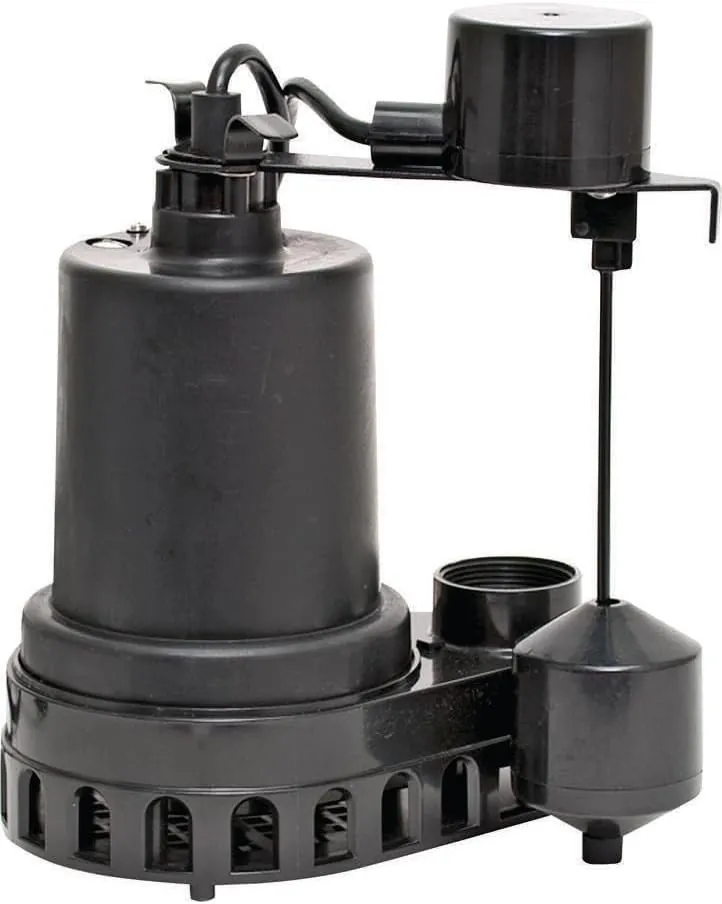
Superior Pump 92372 Thermoplastic Sump Pump
Light 1/3 HP thermoplastic pump with a piggyback vertical float for small pits.
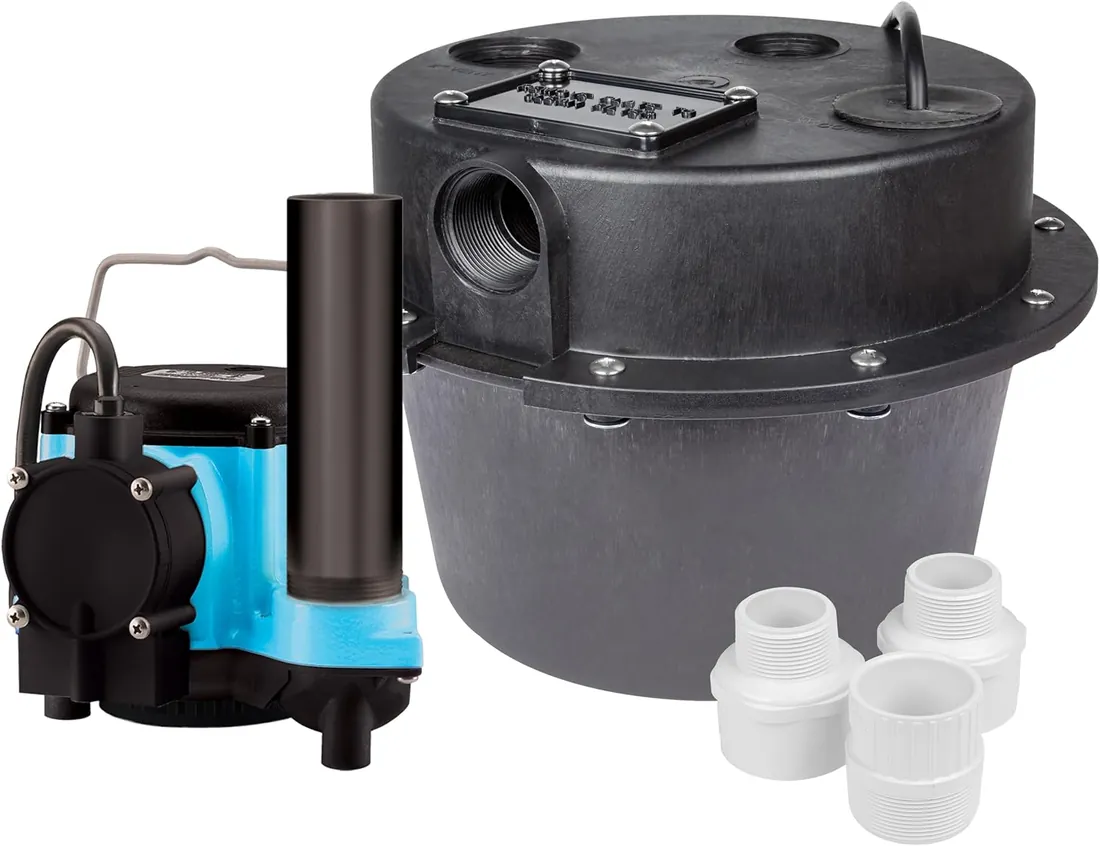
Little Giant WRSC-6 Compact Sump Pump Basin System
Preassembled 3.5 gallon basin system for spots where a full pit will not fit.
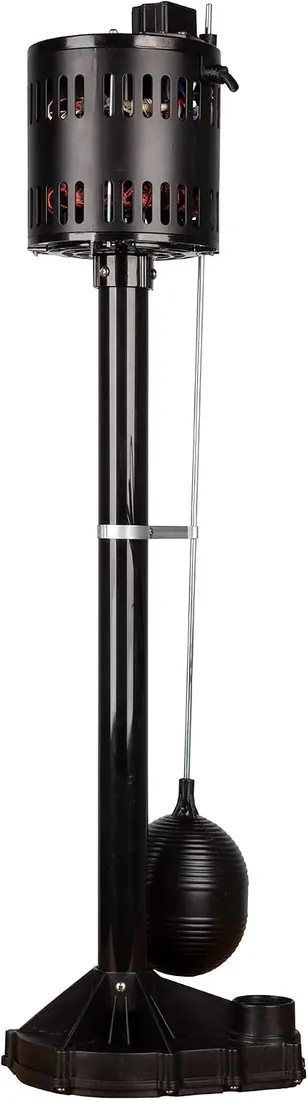
Red Lion RL-SP33PED Pedestal Sump Pump
Pedestal pump rated for basins 13 in or wider, with the motor kept above water.
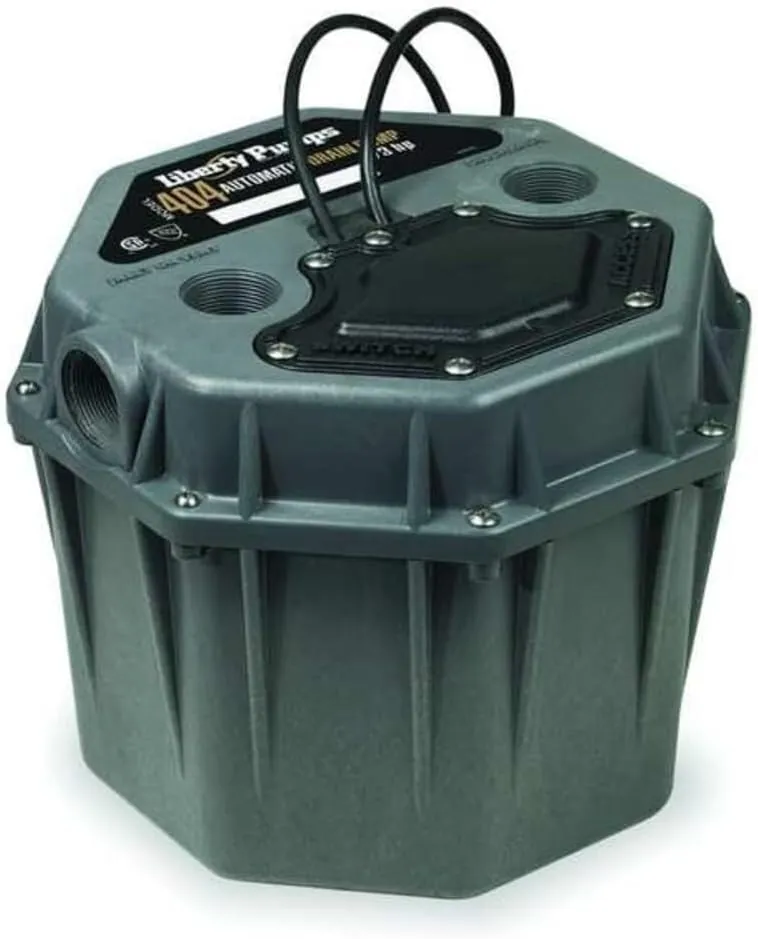
Liberty Pumps 404 Short Profile Drain Pump
Sealed drain pump system only 11 in tall for sink or dehumidifier water.
Questions readers ask
Can you put a sump pump in a crawl space?
Yes. Red Lion rates its pedestal pump for crawl space sump pits, and compact basin systems are made for tight spots. The pump needs a lidded basin, a GFCI outlet within cord reach and a rigid discharge that carries water away from the foundation.
What size sump pump do I need for a crawl space?
Usually a 1/3 HP pump or smaller is plenty, because crawl space inflow is low and the lift out through the rim joist is short. Confirm by reading the pump's flow at your lift on the maker chart and comparing it with how fast the pit fills.
Why is my crawl space sump pump not working?
Check the GFCI outlet first, since damp crawl spaces trip them. Then make sure the float can move, the pit has not filled with silt and the discharge line has not frozen or been crushed outside.