When a grinder alarm sounds, cut water use at once: no laundry, showers, dishwashers or flushing. Then check the breaker and control panel, because power loss is the most common cause. If power is fine, the pump may be jammed, the float stuck, the discharge blocked or frozen, or the check valve failed. Utility-owned grinders should be left to the utility.
What the alarm is telling you
A grinder system has at least two floats. One starts and stops the pump; the other sits higher and only moves when the level keeps rising. Liberty's PRG manual describes the sequence: if a float switch, control relay or pump fails, the liquid rises, tilts the high-level alarm float and the alarm activates. In a simplex station Liberty places the alarm float at least 1 ft above the pump-on level and below the inlet pipe.
So the alarm says the pump has not kept up, not why. Liberty points out that the plumbing code calls for an audio and visual alarm on sewage systems, and that any alarm should run on a separate circuit, so it can still sound when the pump circuit is dead.
| Float | Position |
|---|---|
| Pump off | Level with the top of the motor housing |
| Pump on | At least 1-1/2 ft above the off level |
| High-level alarm | At least 1 ft above pump on, below the inlet |
Figures: Liberty Pumps installation manual 2399000, PRG-Series grinder pumps.
First steps when it sounds
Silence the horn if the panel allows, but leave the light on so you know the fault is active. Stop all water use in the house, since every flush and shower goes straight into a tank that is already above its alarm level. Then go to the electrical side, which accounts for many alarms.
Note what else happened recently. A storm that cut the power, a party with heavy water use, or a contractor working on the electrical panel all point to different causes, and the person who services the pump will ask.
- Stop using water and tell everyone in the house.
- Check the pump breaker and any GFCI feeding the panel.
- Look at the control panel selector: it should be in Auto.
- Reset a tripped breaker once; if it trips again, stop.
- Call the utility or a pump contractor if the alarm stays on.
Pump will not start
Liberty's troubleshooting matrix for its PRG grinders lists the usual suspects for a pump that does not start: a damaged power or control cord, a panel selector switch in Off, a tripped breaker or GFCI, improper or low voltage, a float that cannot rise because something in the basin holds it, a defective float switch, loose wiring, an obstructed impeller and a tripped thermal overload. Liberty asks for voltage to be checked and, if it is under 108 V, for the wiring size to be checked and any extension cord removed.
If the pump runs in Hand but not in Auto, the fault is in the controls, usually the float or a relay. Liberty suggests checking the float level control or the alternator relay on duplex systems.
Runs or hums but does not pump
A grinder that runs while the level climbs is fighting a restriction. Liberty lists a blocked or restricted discharge, including ice where the line passes through cold areas, a check valve stuck closed or fitted backwards, a closed gate or ball valve, total head beyond the pump's capacity and an obstructed impeller. Items that should never reach a grinder, such as wipes and towels, are a common cause of jams; Liberty's manuals limit what goes into any sewage system to waste and toilet paper.
Before power is ever applied after service, Liberty asks that the cutter be turned by hand to make sure it spins freely, wearing gloves because the edges are sharp. It also recommends turning the cutter five to ten full rotations if the pump has been idle more than a week.
Short cycling, running with no use, and noise
A grinder that runs when nobody is using water is refilling from somewhere. Liberty names a missing, stuck or leaking check valve and leaking fixtures such as a running toilet. Frequent cycling can also come from float settings, and Liberty asks that the on to off differential not exceed 12 starts per hour on duplex stations. A pump that stops and restarts after a short period may sit in a basin that is too small.
Noise points to rigid pipe fixings, foreign objects in the impeller cavity, wrong rotation or running below the pump's minimum head, which causes cavitation. For a system that keeps failing, compare options on the sewage ejector pump list; the Aquastrong SEP100CA is the grinder in our catalog.
Common mistakes
- Running the dishwasher or laundry while the grinder alarm is on.
- Flushing wipes, towels or floss into a grinder system.
- Resetting a breaker over and over when it keeps tripping.
- Opening a utility-owned grinder tank without calling the utility.
- Powering the pump on an extension cord or shared circuit.
Products that fit
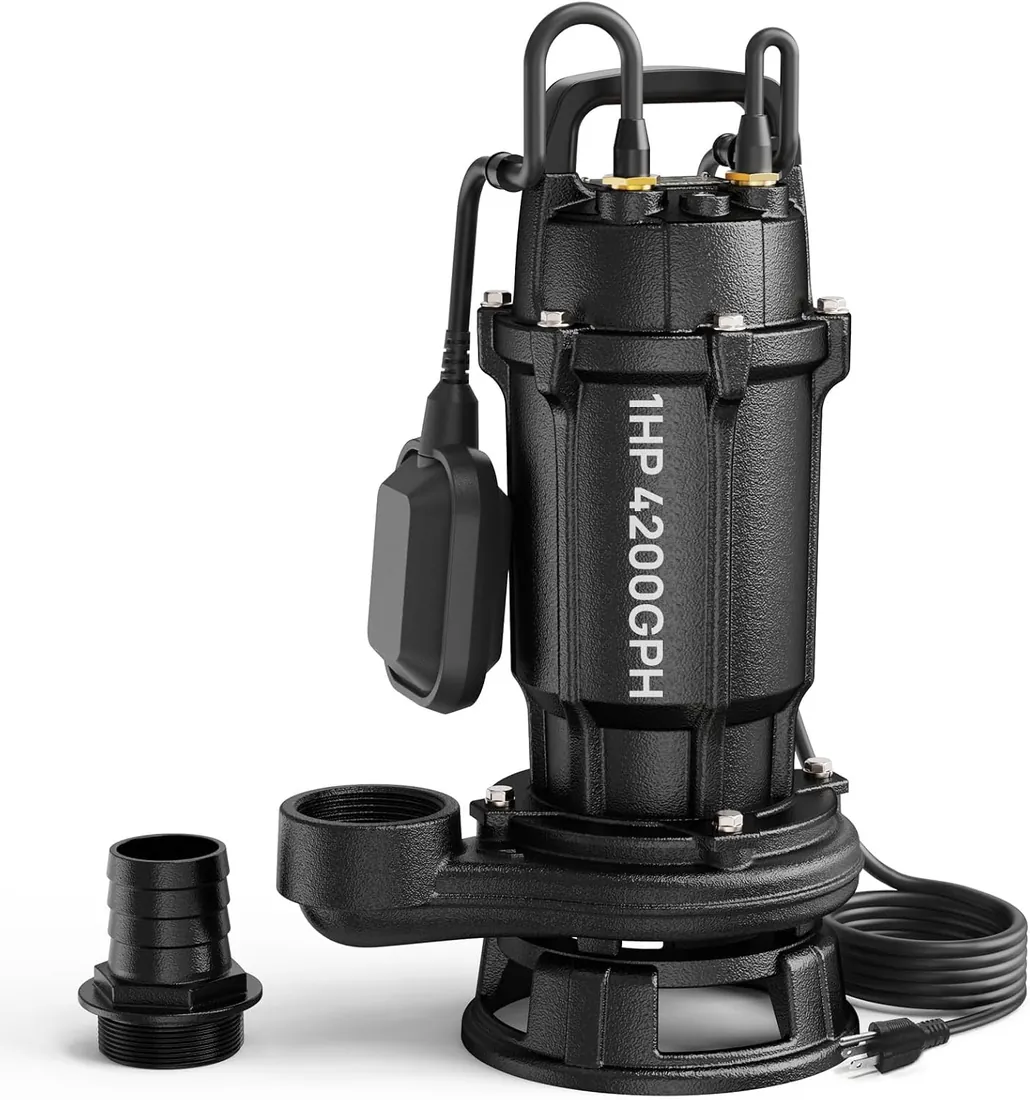
Aquastrong SEP100CA 1 HP Sewage Grinder Pump
One-horsepower grinder pump for pressurized or long uphill sewage runs.
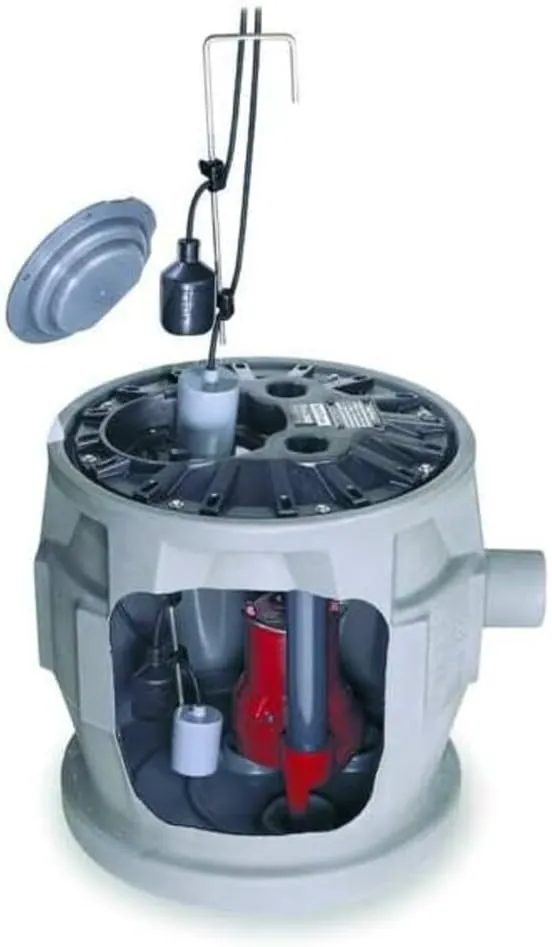
Liberty Pumps P382LE51 Pro380 Simplex Sewage System
Non-grinder alternative where a nearby gravity sewer can take 2 in solids.
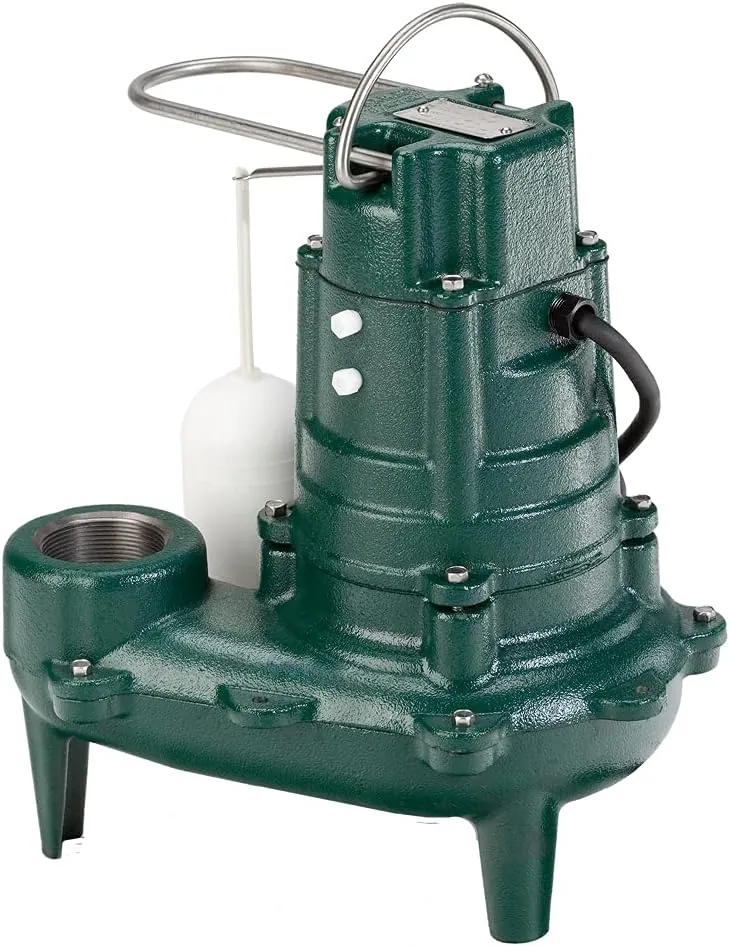
Zoeller M267 Waste-Mate Sewage Pump
Cast iron sewage ejector when cutting waste to slurry is not needed.
Questions readers ask
What do I do when my grinder pump alarm goes off?
Stop using water in the house, check the breaker and control panel, and reset a tripped breaker once. If the alarm stays on or the breaker trips again, call the utility or a pump contractor. Do not open the tank yourself if the utility owns it.
How long can I use water with a grinder pump alarm on?
As little as possible. The alarm float sits only a short distance below the inlet, so the remaining room in the tank fills quickly. Hold off on laundry, showers and dishwashers until the pump is running again.
Why does my grinder pump keep tripping the breaker?
Liberty lists underrated circuit protection, other appliances on the same circuit, an extension cord or poor wiring, improper voltage, an obstruction in the pump and wrong motor rotation. Repeated trips need an electrician or pump technician.
Can wipes damage a grinder pump?
Yes. Liberty's sewage manuals say only human waste and toilet paper should go into the system. Wipes and towels jam cutters and impellers and block discharge lines, even when labeled flushable.