Set a sealed basin with its top level with the floor, bedded in pea gravel, and connect the fixtures to its 4 in inlet hub. Run a 2 in discharge through a union, a check valve and a ball valve, and vent the basin to the building vent with pipe no smaller than the discharge. Use a dedicated circuit, add the high-water alarm code calls for, and run several cycles.
Plan the system before breaking concrete
Sewage systems are code work in most places, with a permit, inspection and often a licensed plumber. Start with sizing. Liberty asks whether the system was sized by a professional, because sewage needs minimum flow to carry solids. Basin size follows the pump: Zoeller lists an 18 in x 30 in minimum simplex basin for its M267, and Wayne specifies an 18 in or larger basin for its RPP50.
Pre-assembled systems remove most of the guesswork. Liberty's Pro380 package, such as the P382LE51, arrives with pump, sealed cover, discharge pipe and a float tree set at the factory. A separate pump and basin, such as the Zoeller M267 in a matching basin, gives more choice but more assembly.
| System or pump | Basin | Inlet | Discharge |
|---|---|---|---|
| Liberty Pro380 (vertical discharge) | About 24.38 in across | 4 in no-hub hub | 2 in or 3 in threaded port |
| Zoeller M267 | 18 in x 30 in simplex minimum | Per basin | 2 in NPT |
| Wayne RPP50 | 18 in or larger | Per basin | 2 in NPT |
Figures: Liberty Pumps installation manual 7225000, Pro370 and Pro380 systems; Zoeller technical data sheet FM2789, Model 267; Wayne RPP50 cast iron sewage and effluent pump sell sheet.
Set the basin
Liberty's instructions for in-ground basins are specific. Dig the hole as small as possible but with about 8 in of clearance around the tank, and keep the basin off rocks and sharp objects. Bed and backfill with fine pea gravel between 1/8 in and 3/4 in, or washed crushed stone, never sand or native soil, and compact under the basin so it sits level and solid when full. Its manual suggests the basin lip finish flush with the surrounding floor.
Connect the gravity drain from the toilet, shower and sink to the basin inlet. Liberty's Pro-Series basins have a 4 in inlet molded to the side, sized for a 4 in no-hub coupling. Keep heavy loads off the backfill; Liberty warns the tank can collapse under heavy pressure.
- Excavate with about 8 in of clearance around the basin.
- Bed the basin in fine pea gravel or washed crushed stone.
- Level the basin with its lip at finished floor height.
- Connect the fixture drain to the 4 in inlet with a no-hub coupling.
- Backfill with the same gravel and mound slightly for settling.
Discharge and vent piping
Thread an adapter into the cover's discharge port and keep the full size. For Liberty's non-grinder Pro-Series systems the discharge must not be smaller than 2 in. Put a union just above the cover so the pump can come out, then a check valve, which Liberty requires to stop the column of waste falling back after each cycle, then a gate or ball valve so the check valve can be cleaned. Keep the rest of the line short with few turns.
The vent is not optional. Liberty asks for the vent to meet code but never be smaller than the discharge, and to run to the building vent or outside on its own stack. Sewage gas is poisonous and flammable, which is why the cover, cord entries and access lid are all sealed.
Floats, cords and the access cover
On Liberty's Pro370 and vertical-discharge Pro380 systems the floats sit on the QuickTree, a stainless rod under its own access cover. They are preset at the factory, and Liberty says not to adjust them, since field changes can make the pump or alarm switch at the wrong level. When the tree is back in place, lay each cord in its rubber channel under the cover and plug the unused channel if there is no alarm float; otherwise sewer gas leaks. Liberty gives a bolt sequence and a torque of 40 in-lbs for the access cover.
Separate pumps with their own switches set their own levels. Zoeller's M267 automatic model turns on at 12 in and off at 4 in. Whatever the design, the alarm float must sit above the pump's on level and below the inlet.
Power, alarm and first start
Liberty asks for a separate, fused and grounded branch circuit sized for the pump, no extension cord, and in a below-grade room an outlet at least 4 ft above the floor. In 208/230 V installations one leg is always live, so install a double-pole disconnect near the pump. Liberty also notes that the plumbing code requires an audible and visual alarm on sewage systems, and its own manuals want any alarm on a separate circuit.
Liberty recommends a licensed electrician be present when the panel or breaker is first energized. Then fill the basin with clean water and run several full cycles, watching for leaks, a check valve that slams or drips back, and the alarm tripping when you raise its float. For a side-by-side look at pumps, see the sewage ejector pump list.
Common mistakes
- Backfilling the basin with sand or native soil.
- Reducing the discharge below 2 in on a non-grinder system.
- Venting the basin with pipe smaller than the discharge.
- Moving the factory-set floats on a packaged sewage system.
- Leaving a cord channel unsealed so sewer gas escapes.
- Skipping the high-water alarm the plumbing code requires.
Products that fit
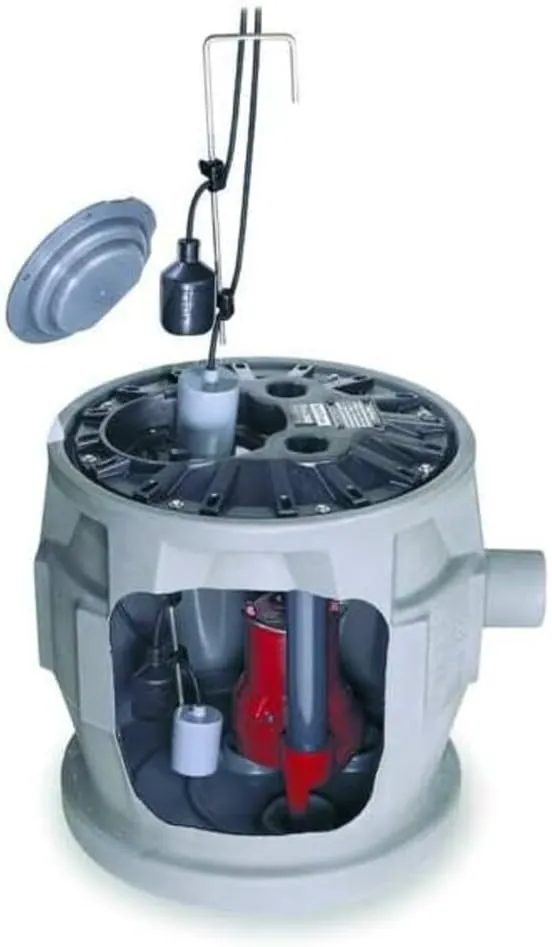
Liberty Pumps P382LE51 Pro380 Simplex Sewage System
Pre-assembled Pro380 system with a sealed cover and factory-set QuickTree floats.
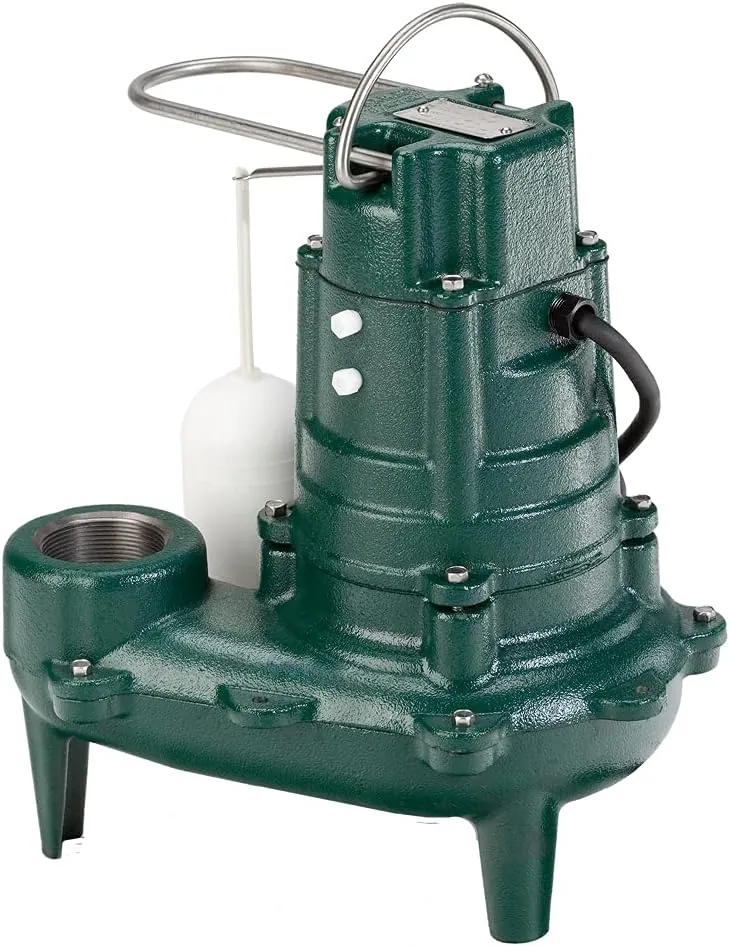
Zoeller M267 Waste-Mate Sewage Pump
Cast iron sewage pump for an 18 in x 30 in simplex basin.
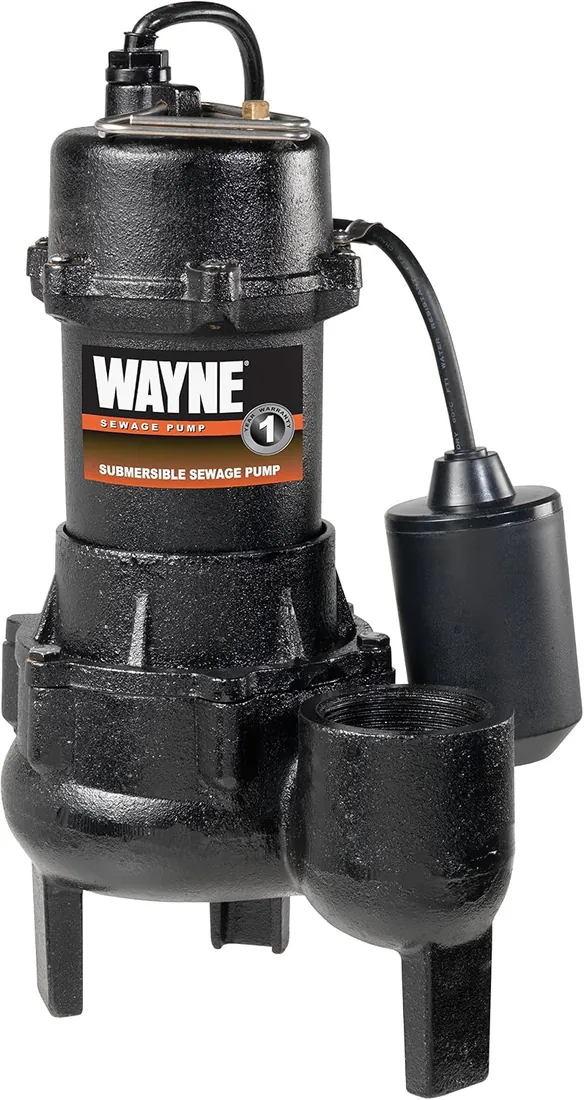
Wayne RPP50 Sewage Pump
Half-horsepower sewage pump for basins 18 in across or larger.
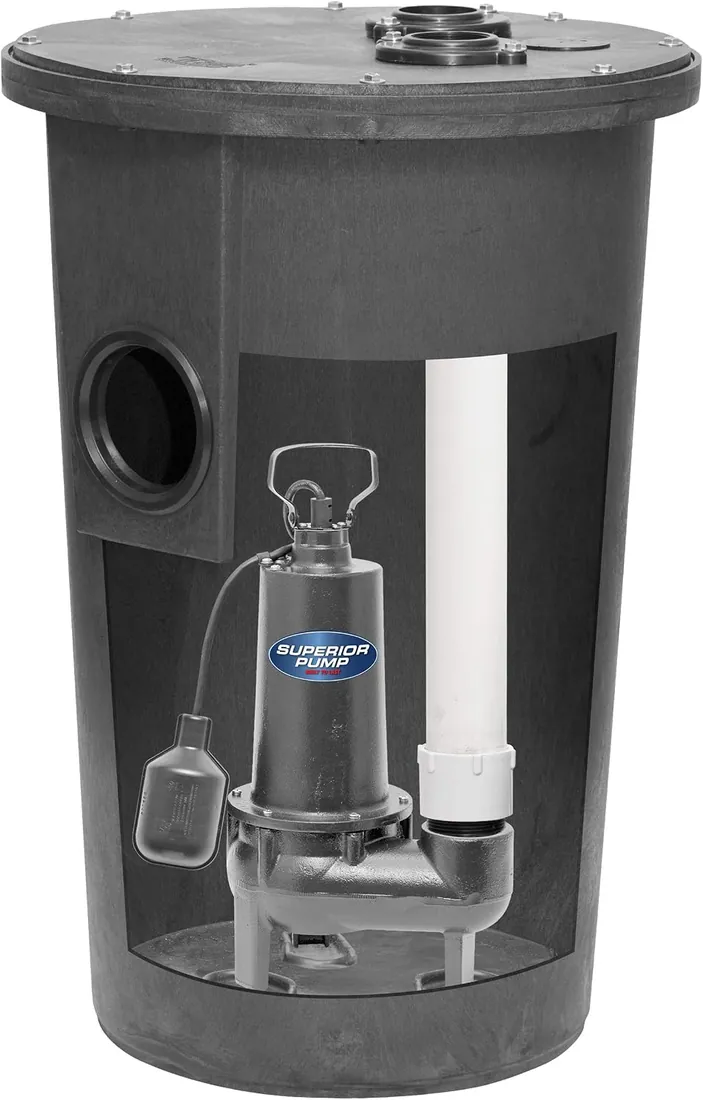
Superior Pump 93015-U Sewage Pump and Basin System
Superior sewage pump supplied together with a basin for a basement bathroom.
Questions readers ask
Does a sewage ejector pit need a vent?
Yes. Liberty requires the basin to be vented per code with a vent no smaller than the discharge, tied into the building vent or run outside. Venting removes poisonous and flammable sewer gas.
What size pipe does a sewage ejector need?
Usually 2 in discharge. Liberty states that its non-grinder sewage systems must not use a discharge smaller than 2 in. The inlet from the fixtures is typically 4 in, matched to a no-hub coupling.
Is an alarm required on a sewage ejector?
Liberty notes that the Uniform Plumbing Code calls for an audio and visual alarm on sewage systems. Many local codes follow it, and an alarm is cheap insurance against a basin backing up into the house.
Can I install a sewage ejector pump myself?
Owners often replace a pump in an existing basin, but a new system usually needs a permit and inspection. Breaking slab, tying into drains and venting is commonly licensed plumbing work, and Liberty asks for qualified personnel throughout.