A septic alarm means the liquid in the pump chamber has risen above the pump's on level. Cut water use straight away, then check the pump's breaker and the control panel. If power is on, the pump, its float or the line to the field has a problem. Heavy rain or a leaking toilet can also overwhelm a working pump. Call a septic professional if the alarm does not clear.
How a septic pump chamber is controlled
Effluent pumps in septic systems are usually run by separate float switches rather than a float built into the pump. Zoeller recommends non-automatic pumps with external level controls for septic tank effluent, often mounted on a float tree or hanger so the floats cannot catch on the pump or pipes. One float stops the pump, one starts it, and a third, higher float trips the alarm.
The off level matters for the pump's life. Liberty requires effluent pumps to stay fully submerged to prevent corrosion, and Zoeller says the off point should be above the motor housing and never below the discharge on effluent duty. If a float has slipped and lets the level fall too low, the pump may fail early.
What to do the moment it sounds
Water entering the house drains keeps flowing into the septic tank and on into the pump chamber. While the alarm is on, every shower and load of laundry eats into the reserve space above the alarm float. Stop heavy use first, then work through the electrical checks. A tripped breaker or a float knocked out of place is quick to rule out, but only an inspection of the chamber shows the full picture.
- Stop laundry, dishwashers, showers and baths until it is fixed.
- Silence the horn if the panel allows; leave the light on.
- Check the pump breaker and any GFCI or fuse at the panel.
- Look for a selector switch left in Off or Hand.
- Reset a tripped breaker once and watch whether the pump runs.
- Call a septic professional if the alarm returns or stays on.
When the pump is not running
Liberty's troubleshooting matrix for its dewatering and effluent pumps gives the causes of a pump that does not start: a damaged power or control cord, a selector switch in Off, a blown control fuse, a tripped breaker or GFCI, improper voltage, a float that cannot rise because something in the basin holds it, a defective float switch, an obstructed impeller and loose wiring. Zoeller's checklist adds an overload that has opened, a float held down, and a switch that is damaged or out of adjustment.
Floats in septic chambers can be fouled by scum or knocked out of position during a pump-out. A septic service can lift the float tree, clean the floats and confirm each one closes. If the pump hums but does not turn, the impeller may be jammed with debris that slipped past the tank's outlet filter.
When the pump runs but the alarm stays on
If the pump runs and the level still rises, the problem is between the pump and the field. Liberty lists a blocked or restricted discharge, a check valve stuck closed or fitted backwards, a closed gate valve, total head beyond the pump's capability and an air-locked pump. Zoeller adds incoming water carrying air into the pump. In winter, a discharge line that crosses cold ground can freeze.
The other possibility is too much water. Liberty lists leaking fixtures under a pump that runs when fixtures are not in use, and a toilet that runs all day feeds the chamber continuously. Heavy rain soaking into a tank lid or riser does the same. Fix the leak or the surface water, and the pump usually catches up.
The alarm itself, and choosing a replacement pump
Zoeller recommends a high water alarm on every submersible system, especially where there is only one pump, and Liberty wants an alarm on a separate circuit so it still works when the pump circuit has tripped. Indoor alarm kits such as the Superior 92060 are rated for sewage basins and holding tanks; an alarm mounted outdoors needs an enclosure rated for it.
If the pump has failed, replace it with one meant for effluent. Zoeller asks that effluent systems pass solids no larger than 3/4 in so they do not clog the field, and Liberty advises against short-cycle vertical-float sump models for effluent work. The Wassermann 4TMS is an effluent pump in our catalog, and the sewage pump list covers heavier models that some codes allow for effluent.
Common mistakes
- Carrying on with laundry and showers while the alarm is sounding.
- Silencing the alarm and forgetting to come back to it.
- Replacing a septic pump with a vertical-float sump pump.
- Ignoring a running toilet that floods the pump chamber daily.
- Putting the alarm on the same circuit as the pump it monitors.
Products that fit
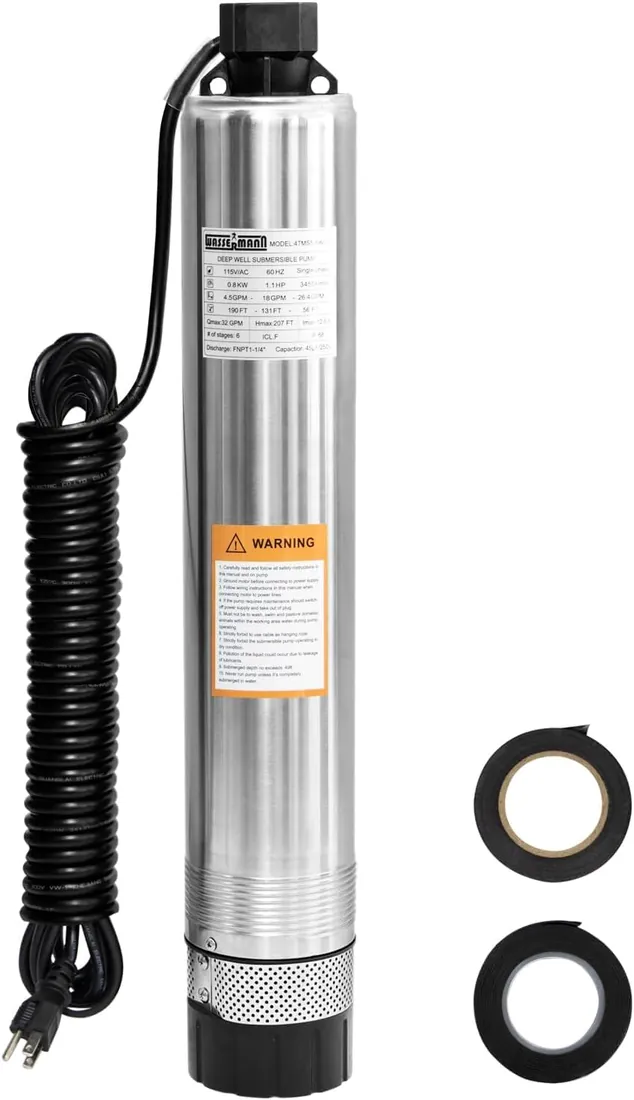
Wassermann 4TMS 1 HP Septic Effluent Pump
Septic effluent pump in our catalog for pump chambers and drain fields.
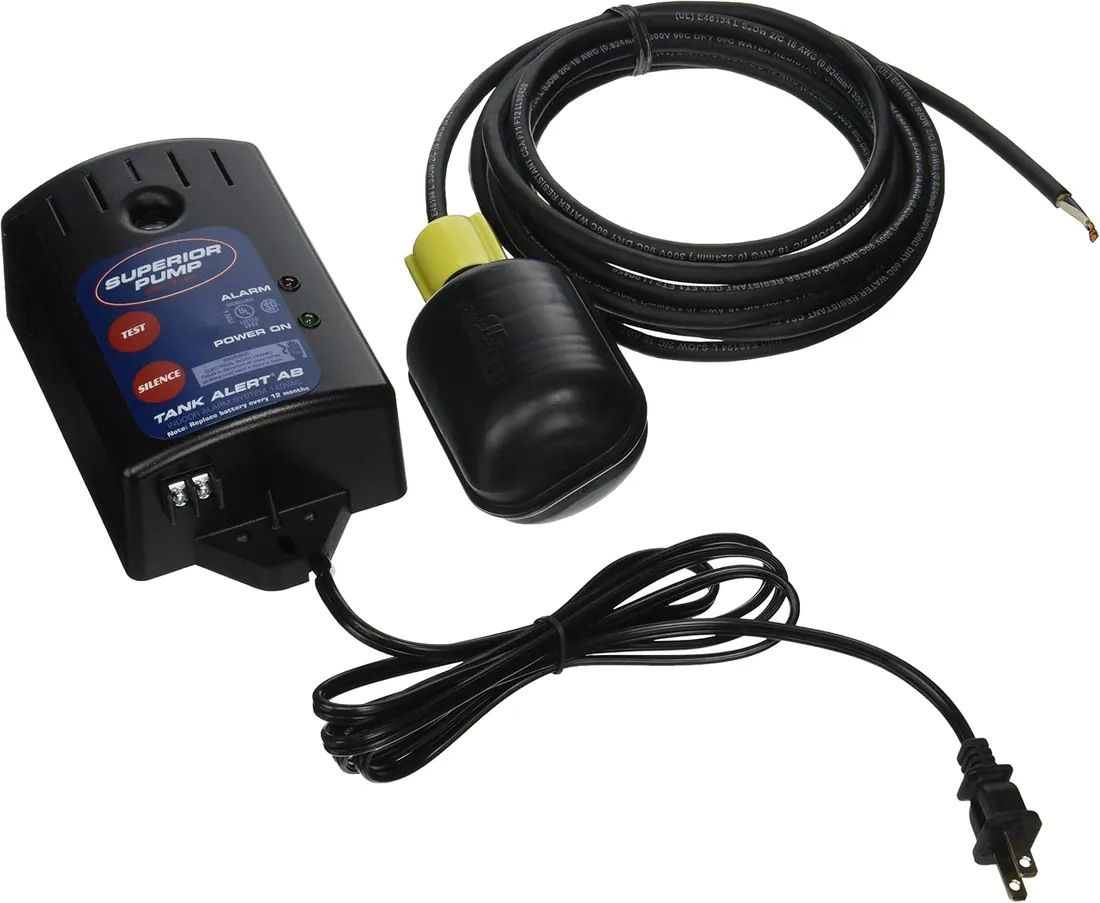
Superior Pump 92060 Sump Alarm
Indoor alarm kit with a tether float, rated for sewage basins and holding tanks.
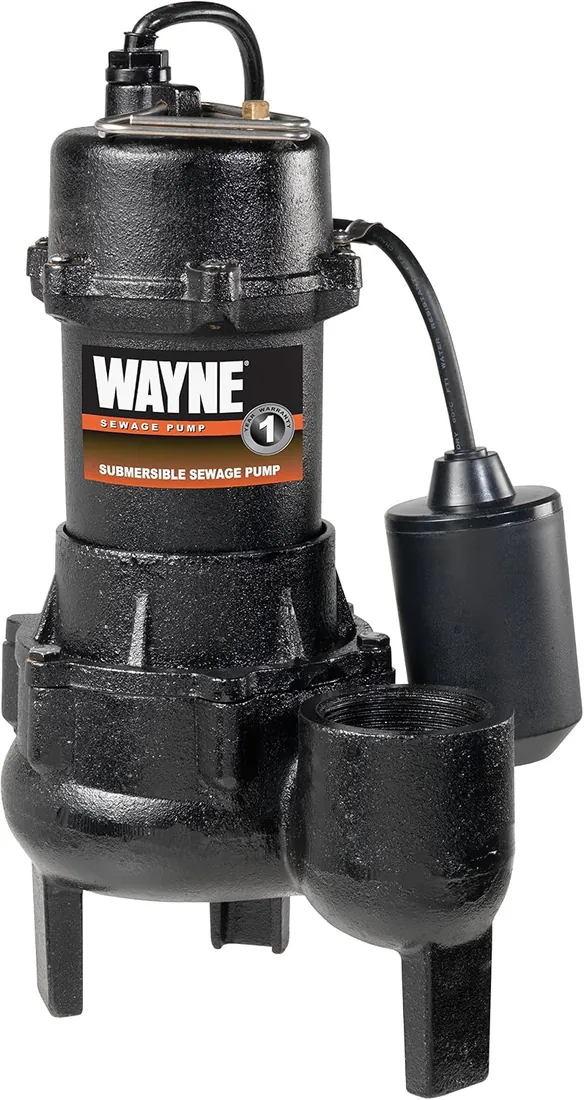
Wayne RPP50 Sewage Pump
Cast iron pump that Wayne sells for both sewage and effluent duty.
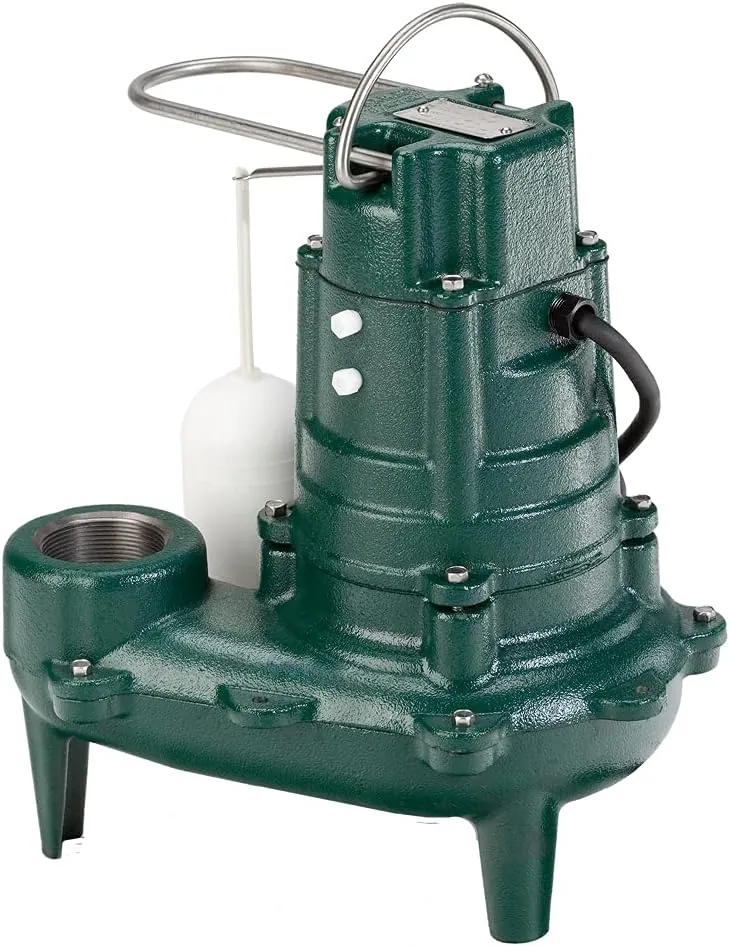
Zoeller M267 Waste-Mate Sewage Pump
Zoeller cast iron pump rated for sewage, effluent or dewatering duty.
Questions readers ask
What does it mean when my septic alarm goes off?
The liquid in the pump chamber has risen above the normal pumping level. Either the pump is not running, it cannot move water out to the field, or more water is coming in than it can handle. Cut water use and check power first.
How long can I use water when the septic alarm is on?
Only lightly, and not for long. The reserve above the alarm float is limited and depends on the tank. Avoid laundry, baths and dishwashers, and get the system checked the same day if the alarm will not clear.
Can heavy rain set off a septic alarm?
Yes. Rain soaking into the tank through lids, risers or saturated ground adds water the pump must move. If the alarm clears once the weather dries and the pump is running, check that lids and risers are sealed.
Should I reset my septic alarm?
Silence it, but do not ignore it. Once the cause is fixed and the level drops, the alarm float falls and the alarm clears. If it comes back, the problem has not been fixed and needs a septic professional.