For a full basement bathroom with a toilet, use a sewage ejector system in a sealed, vented basin under the floor, or a macerating upflush unit behind the toilet if you cannot break concrete. For a sink, shower or laundry tub with no toilet, a smaller drain or grey water pump is enough. A sump pump is never the right choice for bathroom waste.
Why a basement bathroom needs a pump
Waste flows to the sewer or septic tank by gravity. If the main drain leaves the house above the basement floor, anything below it cannot drain on its own and must be lifted. That pump sees raw waste, so it must be a sewage pump that passes solids, not a sump pump; Wayne's sump manual specifically forbids using its sump pumps on raw sewage or grey water.
Plumbing codes add requirements. Liberty's Pro-series manual notes the Uniform Plumbing Code calls for an audio and visual alarm on sewage systems, and sewage basins must be sealed and vented through the roof. A permit and inspection are normal for this work, so involve the local building department early.
Before choosing a pump, find out how deep the main drain sits and where it leaves the house. That one measurement decides whether every fixture needs pumping or only some, and it sets the vertical lift each option has to handle.
Option one: a sewage ejector basin
The standard solution is a sealed basin set into the floor, with a submersible sewage pump inside. The toilet, shower and sink drain into the basin by gravity, and the pump lifts the waste up to the main drain. Liberty's P382LE51 is a complete system: a polyethylene basin about 24 in across, a 1/2 HP LE51 pump, a 2 in discharge and vent, and a QuickTree float system under a separate access cover so floats can be reached without pulling the pump. Liberty covers the system for three years.
Pumps for these basins pass 2 in solids. Zoeller's M267 and Liberty's LE51A both carry that rating, and Superior's 93015-U pairs a sewage pump with a basin. An ejector handles any number of fixtures within its flow, runs quietly under a sealed lid, and lasts well, but it means cutting the floor.
Option two: a macerating upflush system
A macerating unit sits behind a rear-outlet toilet on top of the floor. Blades grind the waste and a pump pushes it through a small pipe to the drain. No digging is needed. Saniflo's listing for the Saniplus says it handles a full bathroom, black and grey water, with installations up to 15 ft vertically or 150 ft horizontally. Zoeller's Qwik Jon units, its own upflush systems, can serve a toilet, lavatory and tub or shower, but Zoeller says a washing machine should not be connected.
The trade-offs are noise, a dedicated toilet, and sensitivity to what is flushed. Macerators are fine for occasional-use bathrooms and tight spaces. See the upflush toilet guide for how they work and the Saniflo Saniplus for one example.
Option three: drain pumps for sinks, showers and laundry
If the space has no toilet, a smaller drain pump system does the job. Zoeller's 105 drain pump system pairs an M53 pump with a polypropylene basin, a 1-1/2 in discharge and a 2 in vent, and lists lavatory sinks, wet bars, laundry trays and dehumidifier water among its uses. It passes 1/2 in solids and is rated to 130 °F. Superior's 92072-U kit combines a 1/3 HP pump with a 6 gallon tank and check valve.
For showers, Saniflo's Sanishower is a grey water pump that fits under a shower base or vanity; its listing gives 0.2 HP and lifts of 12 ft vertically. None of these drain pumps can take toilet waste.
| Option | Example | Handles | Install |
|---|---|---|---|
| Sewage ejector system | Liberty P382LE51 | Toilet, shower, sink, laundry | Basin in the floor |
| Macerating unit | Saniflo Saniplus | Toilet, sink, tub or shower | Behind the toilet |
| Drain pump system | Zoeller 105 | Sink, wet bar, laundry tray | On or in the floor |
| Grey water pump | Saniflo Sanishower | Shower and sink | Under shower or vanity |
Figures: Liberty Pumps Pro380-Series system specifications; SANIFLO Saniplus Amazon listing; Zoeller drain pump series technical data sheet FM2801; SANIFLO Sanishower Amazon listing.
How to choose
Start with the fixtures. A toilet means an ejector or a macerator. Then consider the floor: if you are finishing the basement anyway and can cut concrete, an ejector basin is the long-term choice, with better solids handling and room for more fixtures. If the floor must stay intact, a macerator is the practical route.
Next, check the lift and distance from the bathroom to the main drain against each maker's limits, and plan power: sewage pumps should have a dedicated circuit. Finally, add an alarm. The sewage ejector pump list compares replacement pumps if you already have a basin.
- List every fixture the bathroom will have.
- Measure the vertical lift and horizontal run to the main drain.
- Decide whether the floor can be cut for a basin.
- Check local code for venting, alarms and permits.
- Choose the pump or system whose limits cover your layout.
Common mistakes
- Using a sump pump or drain pump for toilet waste.
- Connecting a washing machine to a macerator that is not rated for it.
- Leaving out the vent on a sewage basin.
- Skipping the high water alarm that code often requires.
- Undersizing for a long horizontal run or high lift.
Products that fit
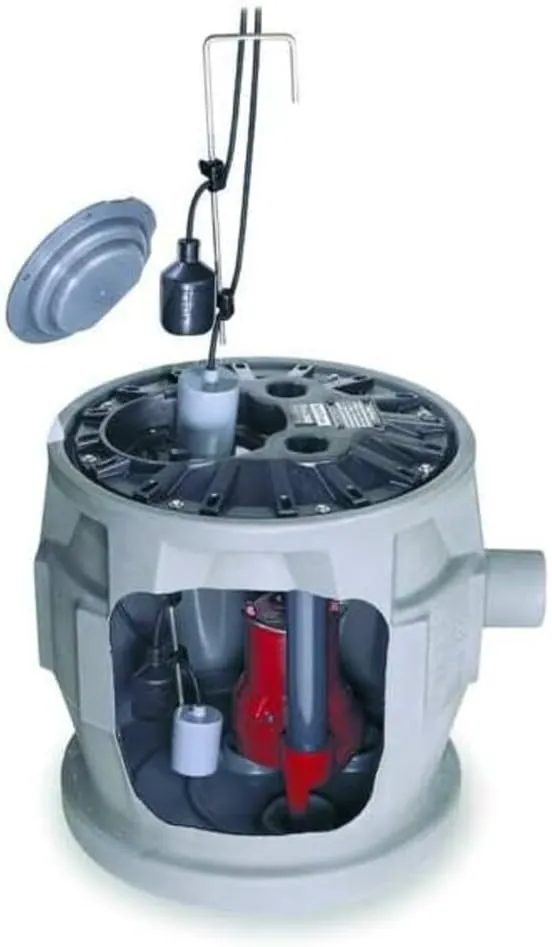
Liberty Pumps P382LE51 Pro380 Simplex Sewage System
Complete sewage basin system with a 1/2 HP pump and QuickTree floats.
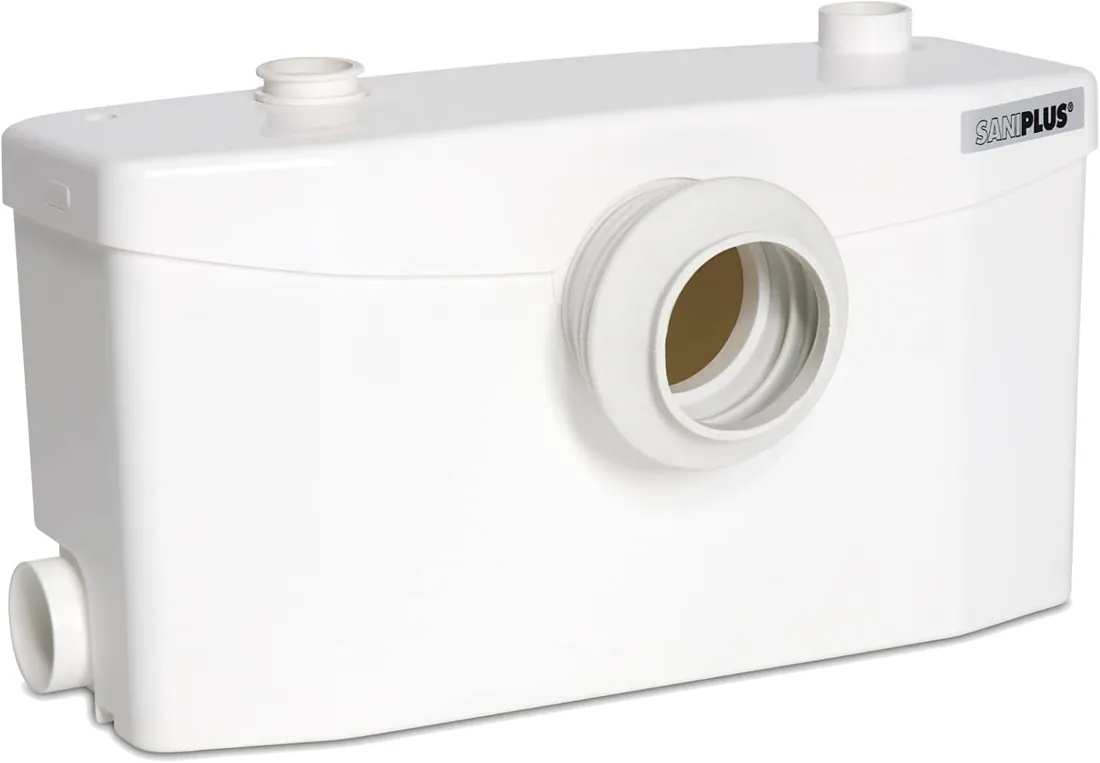
Saniflo Saniplus Macerating Pump
Macerating unit for a full bathroom without breaking the floor.
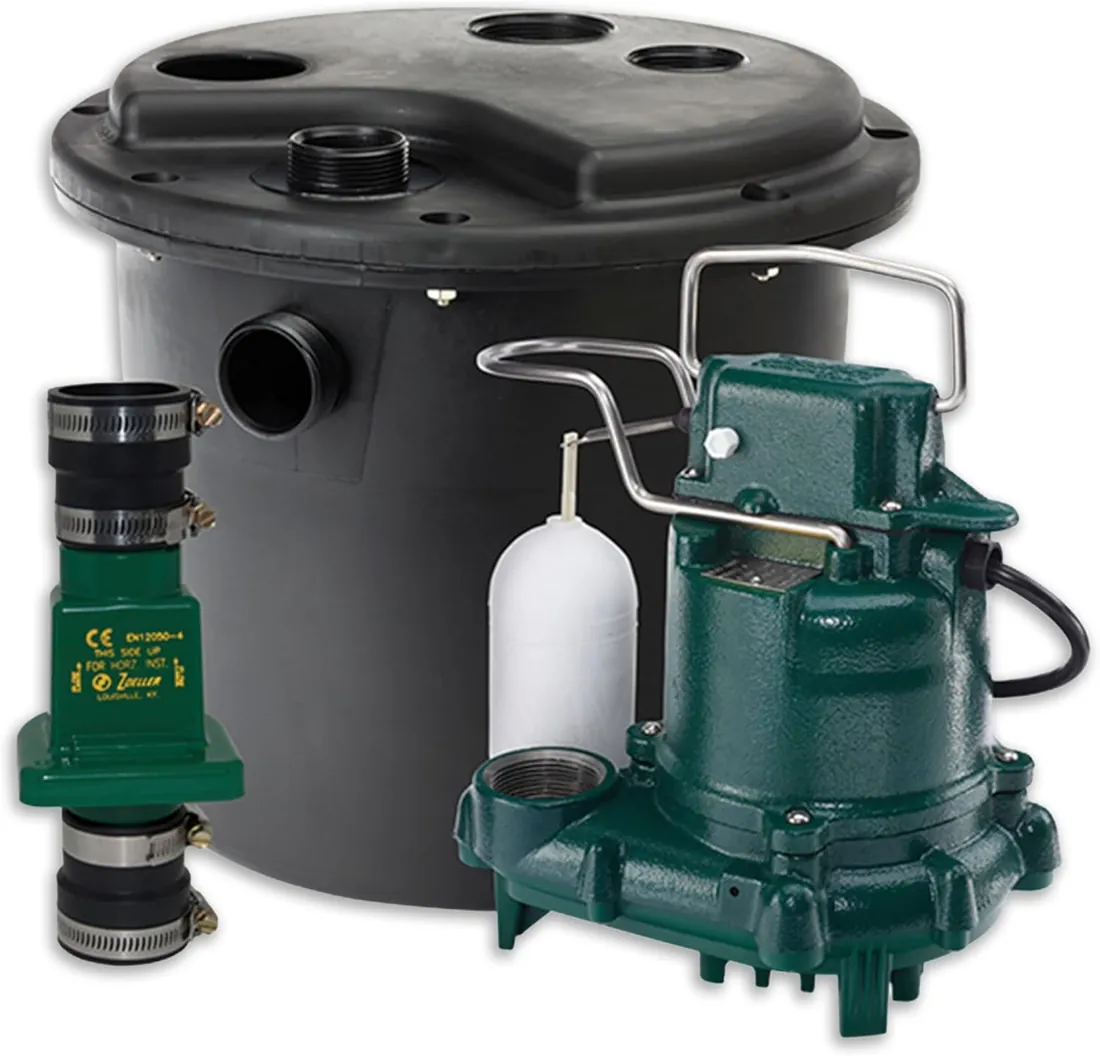
Zoeller 105 Drain Pump System
Drain pump system for sinks, wet bars and laundry trays.
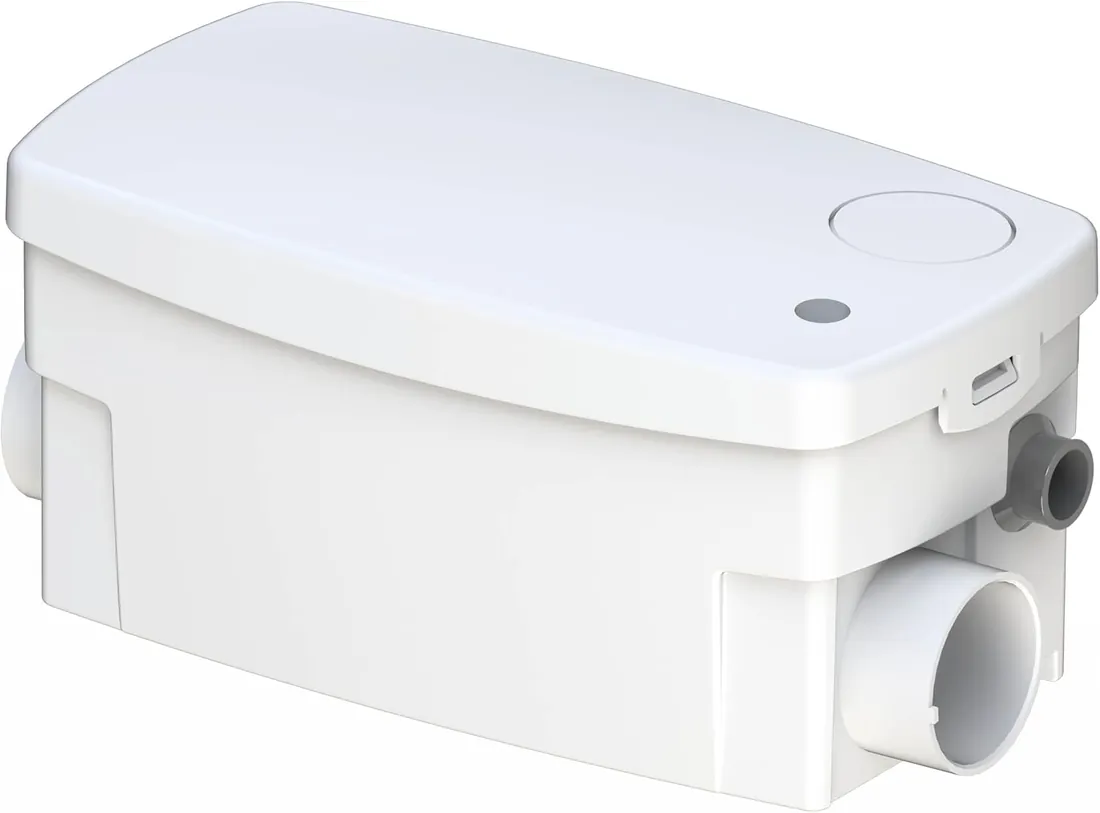
Saniflo Sanishower Gray Water Pump
Compact grey water pump for a basement shower or sink.
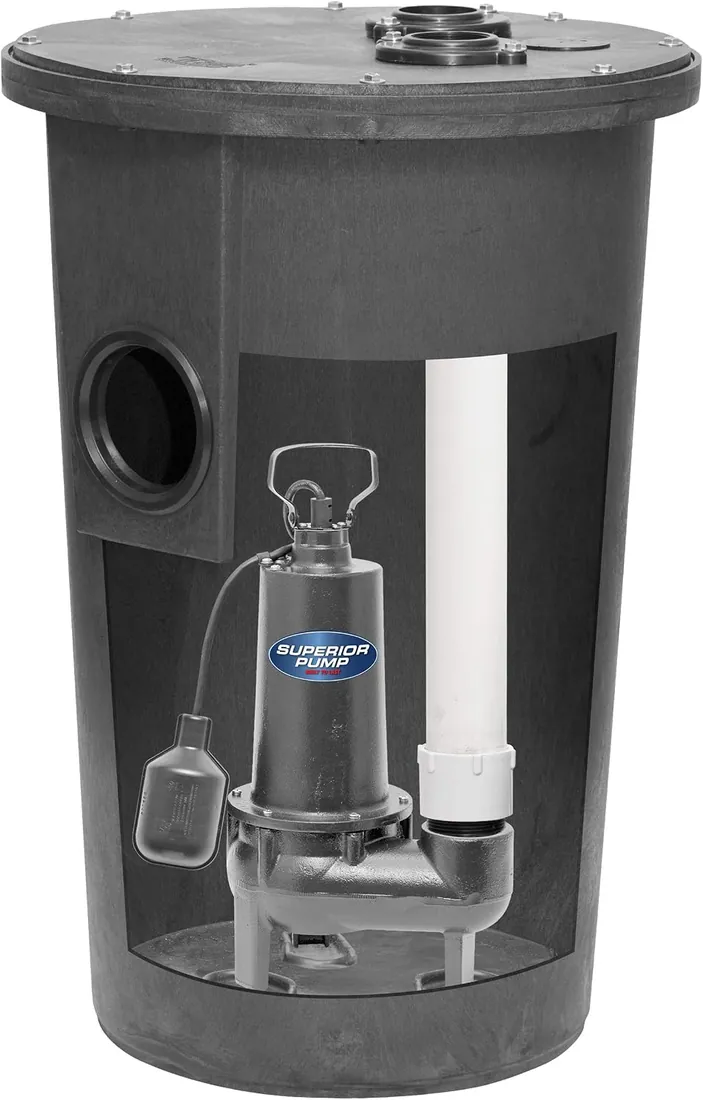
Superior Pump 93015-U Sewage Pump and Basin System
Sewage pump supplied with its own basin for a new installation.
Questions readers ask
Can I use a sump pump for a basement bathroom?
No. Bathroom waste includes solids that clog a sump pump, and Wayne forbids its sump pumps on sewage or grey water. You need a sewage ejector, a macerator, or for fixtures without a toilet, a drain pump.
Is a macerating toilet as good as a sewage ejector?
It avoids breaking the floor, but it is louder, needs a dedicated toilet and is more sensitive to what is flushed. An ejector basin handles more fixtures and heavier use, so it is the better long-term choice when you can install one.
Does a basement bathroom pump need a vent?
Sewage basins must be vented, typically through the roof, and Zoeller's drain system has a 2 in vent connection. Macerating units also need venting per their manuals. Check local code for the exact requirement.
Can a basement shower drain without a toilet pump?
Yes. A grey water pump such as the Saniflo Sanishower or a drain pump system handles shower and sink water. It only needs a sewage-rated system if a toilet joins it.