If a Wayne CDU pump won't start, check the GFCI and breaker, then make sure the vertical float can rise freely and the water reaches about 9 in. If it runs but moves little water, clean the inlet screen and check the check valve. For an ESP25n backup that won't run, check the battery, the connections and the 20 A fuse inside the control box.
Wayne sump pump not working or won't turn on
Wayne's chart lists seven causes for a pump that will not start, and most are outside the motor. Start with power: the CDU pumps plug into a GFCI receptacle, and Wayne notes that GFCIs in damp basements can trip and quietly shut the pump off. Reset it, then check the breaker. Low supply voltage is next on the list, and Wayne's advice there is to call an electrician.
Then look at the switch. The CDU790, CDU800, CDU980E and CDU1000 all use a vertical float that starts the pump at about 9 in of water and stops it at about 4 in. If the pit is lower than that, nothing is wrong. If the water is higher and the float is pinned by debris, the pump cord or the basin wall, free it. Wayne asks for at least 1 in of clearance between the switch and the wall. A clogged inlet screen is the last item before replacing the switch or the pump.
| Switch | On level | Off level | Minimum basin diameter |
|---|---|---|---|
| Vertical float (CDU790, CDU800, CDU980E, CDU1000) | About 9 in | About 4 in | 11 in |
| Tether float (other Wayne models) | About 13 in | About 7 in | 14 in |
Float and switch replacement kits
When the float itself is damaged or waterlogged, Wayne sells repair parts rather than requiring a whole pump. The current manual lists a float kit, a vertical float switch kit, and a tether switch for the tether models. For tether models Wayne goes further and calls switch replacement every two years required maintenance, not optional. The CDU1000 product page also links separate float top replacement kits for pumps made before and after a mid-life design change, so read the model and serial from your pump before ordering.
If the pump hums but the float is free and the pit is full, the switch may be closing while the motor fails, and Wayne's chart remedy for a failed motor is a new pump. A pump past its three-year warranty with a bad motor is usually better replaced; the 1/3 HP sump pump list compares current options.
| Part | Part number |
|---|---|
| Float kit | 60038-WYN1 |
| Vertical float switch kit | 30074-WYN1 |
| Tether switch | 56835-002 |
Wayne sump pump keeps running or cycling
For a pump that will not shut off, Wayne lists a failed switch, an obstructed switch, a restricted discharge pipe, and inflow larger than the pump can handle. If the water level is dropping while it runs, the pump is simply working hard; recheck your sizing with the sizing calculator before blaming the pump.
For a pump that starts and stops too often, the chart points at water falling back from the discharge pipe. Wayne requires a check valve with these pumps; if one is missing, leaking or fitted backward, the column of water drains into the pit after every cycle and restarts the pump. A pump that turns on and off by itself without the float moving is a different fault: that is the motor's thermal protector tripping and resetting.
- Watch whether the pit level falls while the pump runs.
- Lift the float by hand to confirm it moves freely along its full travel.
- Check the check valve for leaks or reversed flow direction.
- Run water from a bucket and time a full cycle.
Thermal trips, GFCI trips and the reset question
Wayne CDU pumps have no reset button. Their motors carry an automatic resetting thermal protector, so a pump that shuts off and restarts on its own, regardless of the switch, has overheated. Wayne's causes are water warmer than 77 °F, a stuck or obstructed switch, a blocked discharge pipe and low voltage, and it adds that protector trips also come from running at very low heads or at the end of the motor's life. Let the pump cool for at least two hours before touching it, as Wayne warns the oil inside is hot and pressurized.
If the GFCI trips, Wayne's chart offers only two causes: a bad GFCI, which an electrician should replace, or a bad pump, which should be replaced. Do not move the pump to an extension cord or an unprotected outlet to keep it running; Wayne forbids both. The breaker and GFCI guide walks through telling the two apart.
Running but not pumping, or noisy
When the pump runs but delivers little or no water, Wayne lists low voltage, a clogged inlet screen, a broken impeller, a pump too small for the job, a check valve stuck closed or installed backward, and a closed shut-off valve. The top-suction intake on the CDU line draws water from above the pit floor, which helps with debris, but the screen still needs clearing during the quarterly checks Wayne asks for.
Noise and vibration usually come from the plumbing rather than the pump. Wayne suggests a rubber coupling to isolate the discharge pipe from the building. Grinding or rattling from inside points to worn bearings or a broken impeller, and for both the remedy in the chart is a new pump.
Wayne ESP25n battery backup: lights, tones and faults
The ESP25n control box speaks through colored lights and tones. With AC power on, the lights show charging state, not true battery health, so Wayne's check is to unplug the main pump and the transformer, wait through the 30-second power-off tone, press the self-test button and read the light after the pump stops. Green is fully charged, yellow is partly charged but usable, red is discharged or defective, and blinking red means the controller has locked the motor out until the battery recovers. A chirp with the red light means the battery needs attention.
If the backup will not run, the chart lists loose connections, a low or failed battery, a stuck float, and a blown fuse inside the control box, which takes a 20 A automotive fuse. A power failure light that stays on with AC present means a bad transformer, a loose connection under the lid, or a tripped branch breaker. Wayne recommends its WSB1275 75 amp-hour battery; the battery guide explains replacement.
Common mistakes
- Plugging the pump into an extension cord after the GFCI keeps tripping.
- Shortening or adjusting a tether float, which Wayne says is not adjustable.
- Reading the ESP25n battery light while AC power is still connected.
- Leaving out the check valve Wayne requires on its CDU pumps.
- Servicing the pump before it has cooled for at least two hours.
Products that fit
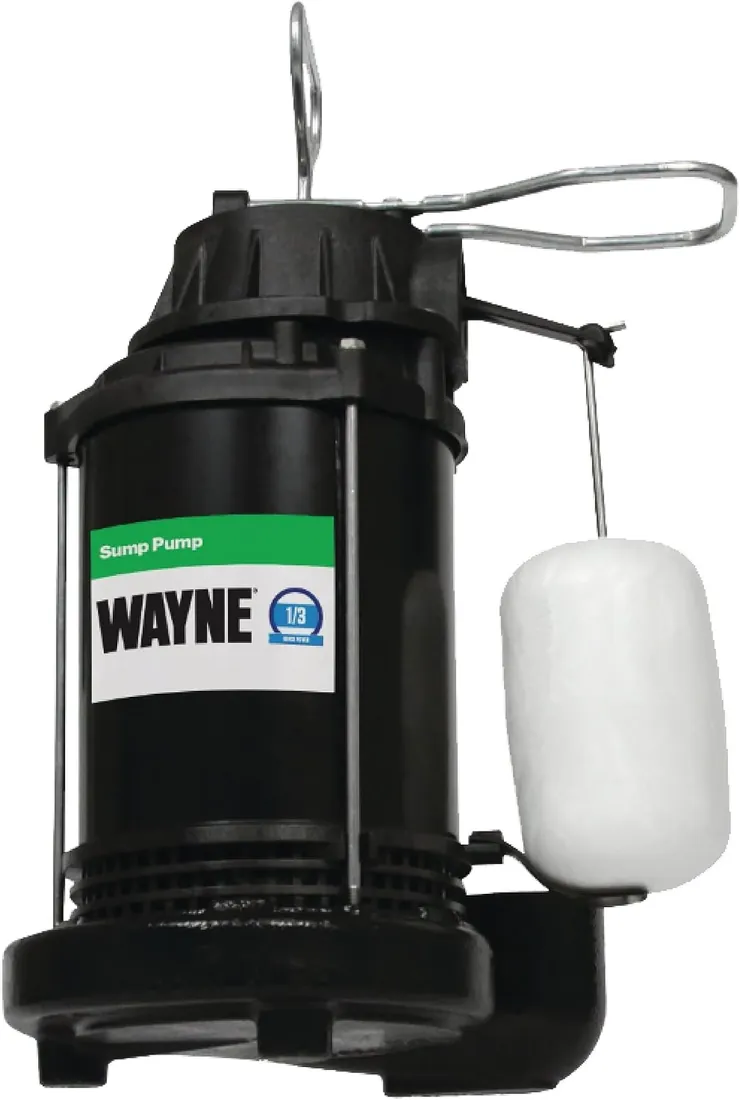
Wayne CDU790 Sump Pump
1/3 HP coated steel pump with a vertical float at about 9 in on and 4 in off.
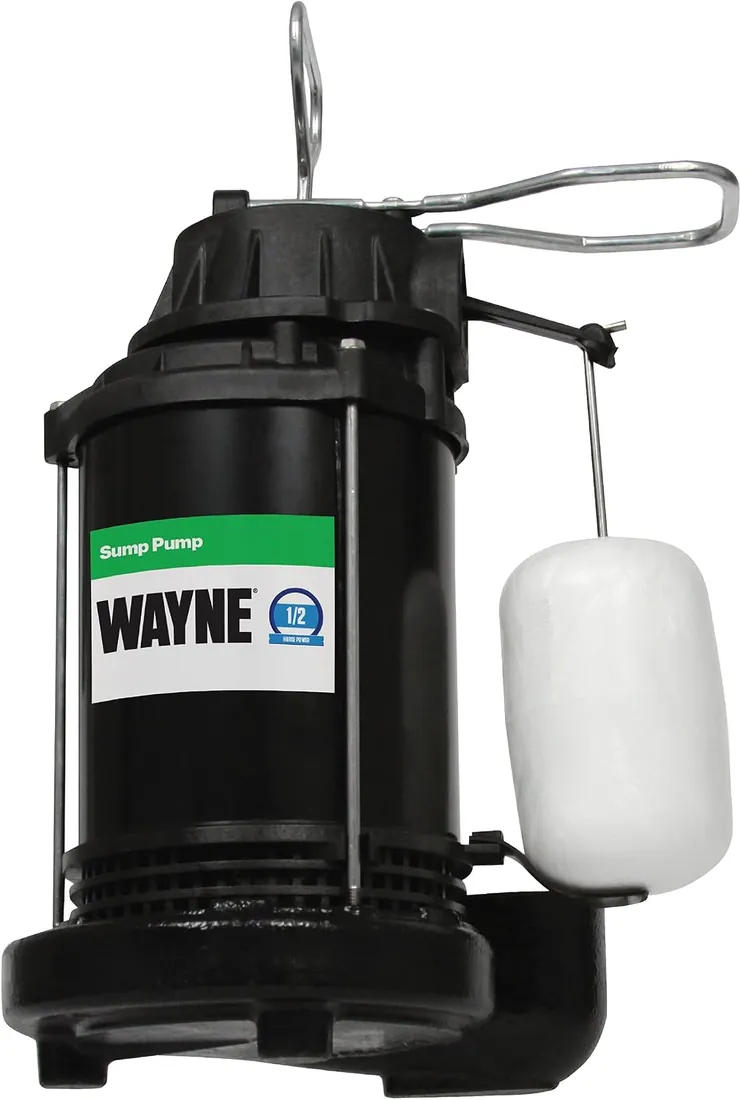
Wayne CDU800 Sump Pump
1/2 HP version sharing the same switch kit and troubleshooting chart.
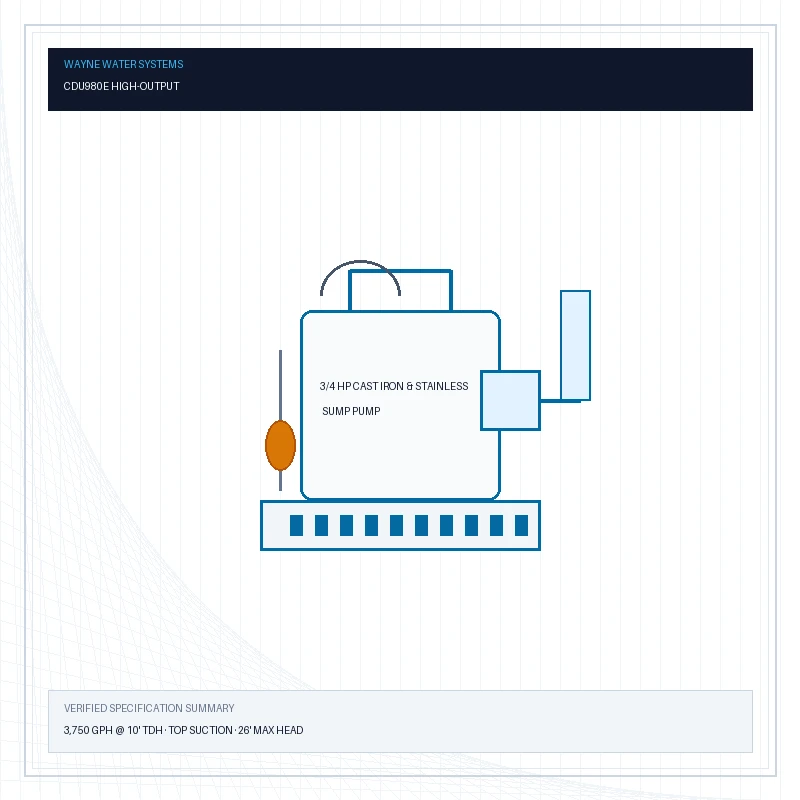
Wayne CDU980E Sump Pump
3/4 HP stainless steel model covered by the same manual and switch levels.
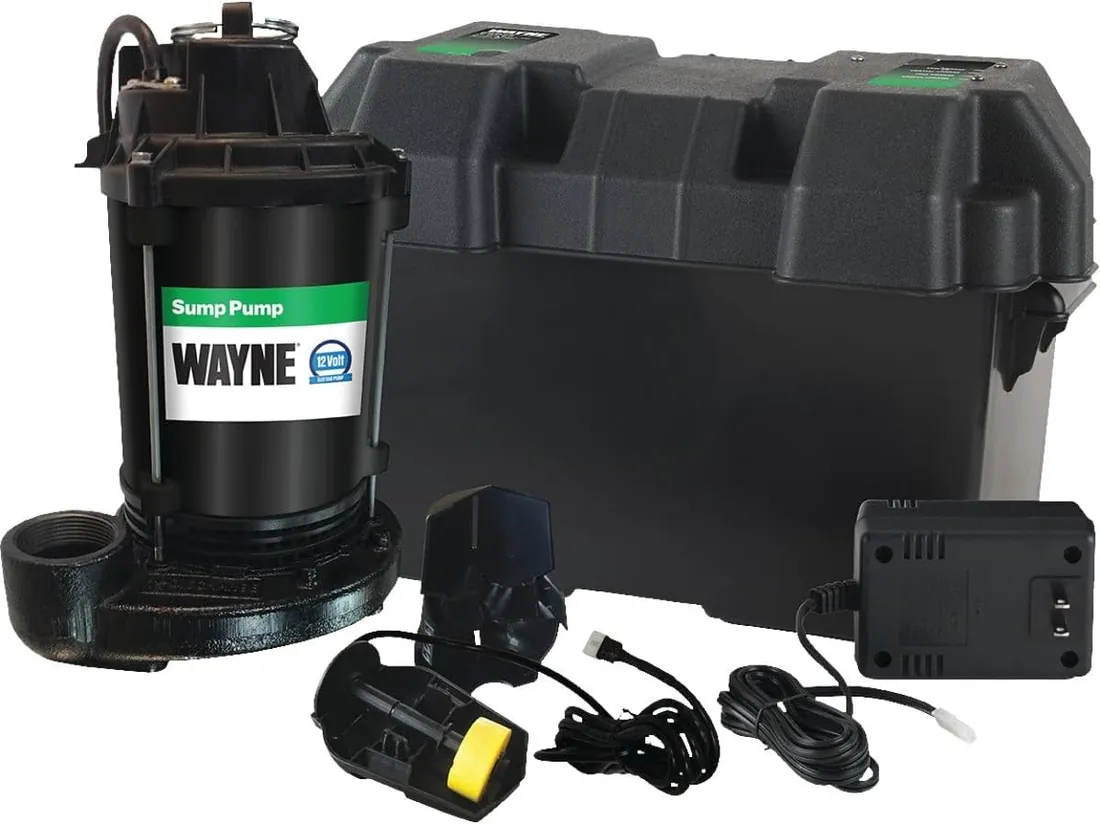
Wayne ESP25n Battery Backup Sump Pump
12 V backup whose lights and tones are decoded in its own chart.
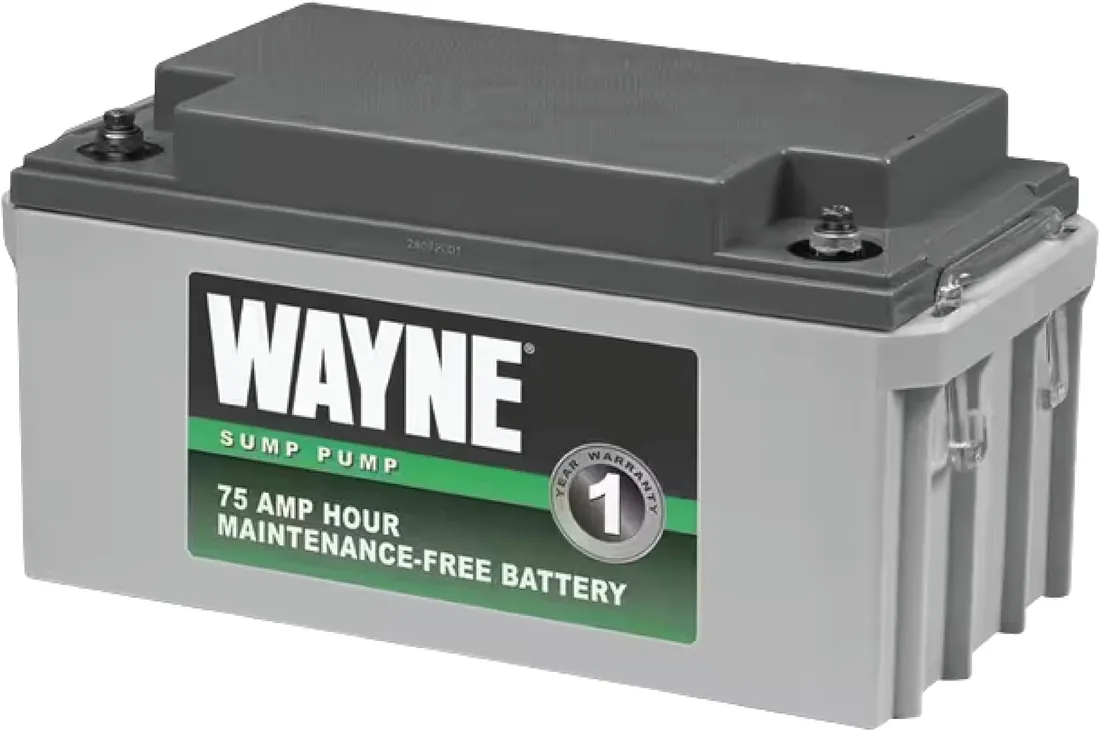
Wayne WSB1275 Standby Battery
The 75 amp-hour standby battery that Wayne recommends pairing with the ESP25n.
Questions readers ask
Where is the reset button on a Wayne sump pump?
There is none on the CDU pumps. The motor has an automatic resetting thermal protector that restarts the pump once it cools. If the pump is dead, reset the GFCI or breaker and check the float before assuming the motor has failed.
Can I replace the float on a Wayne CDU790?
Yes. Wayne lists a float kit and a vertical float switch kit in the sump manual, with part numbers 60038-WYN1 and 30074-WYN1. Match them to your pump's model and serial number before ordering.
Why does my Wayne battery backup keep beeping?
On the ESP25n, a 30-second tone means AC power was lost, a short tone sounds each time the pump starts, and chirping with a red light means the battery needs attention. Run Wayne's self-test with AC unplugged to read the true battery state.
How hot can the water be for a Wayne CDU pump?
Wayne's chart says the pump should not be used for water above 77 °F. Warmer water is one of the listed causes of thermal overload trips, where the pump shuts off and restarts on its own.