When a Goulds jet pump will not run, Goulds lists a tripped thermal protector, an open breaker, a bound impeller, wrong wiring or voltage, or a failed motor. When it runs but delivers little water, the pump is usually not primed, has an air leak in the suction pipe or is lifting too far. Excessive cycling points to the foot valve or the tank.
The JS series at a glance
Goulds' JS brochure covers the J5S, J5SH, J7S, J10S and J15S shallow well jet pumps from 1/2 to 1-1/2 HP. They share a 1-1/4 in NPT suction and 1 in NPT discharge, a factory pressure switch preset to 30/50 psi, a dual-voltage capacitor-start motor with a built-in automatic-reset overload, and a 140 °F water limit. The jet, meaning the nozzle and venturi, is built into the casing, so no separate shallow well adapter is needed.
The catalog carries the Goulds J5S and the Goulds J10S. Goulds' 4 in GS submersibles such as the 5GS05422C are a different pump entirely; their installation manual could not be saved, so this guide covers the jet pumps.
| Model | Power | Nozzle | Venturi |
|---|---|---|---|
| J5S | 1/2 HP | AN017 | AD3332 |
| J5SH | 1/2 HP | AN019 | AD3328 |
| J7S | 3/4 HP | AN018 | AD3336 |
| J10S | 1 HP | AN018 | AD3339 |
| J15S | 1-1/2 HP | AN022 | AD3342 |
Figures: Goulds JS series shallow well jet pump technical brochure BJS+.
How a Goulds jet pump works
A jet pump does not suck water up so much as let air pressure push it. The impeller sends part of its flow back through the nozzle and venturi, which creates low pressure at the suction pipe. Atmospheric pressure then pushes water up from the well. Goulds' manual shows the limit: with a perfect vacuum the theoretical maximum lift is 33.9 ft, and real pumps lose capacity quickly as lift rises because friction and vapor add up.
The manual gives a practical way to measure it. A vacuum gauge on the suction side reading 20 in of mercury means about 22.6 ft of total suction lift, counting both vertical lift and friction. If your reading is high, the pump is working near its limit and will be sensitive to any air leak.
Priming a Goulds shallow well pump
Most no-water calls on a jet pump are prime problems. Goulds' instructions put venting first: the water cannot go in unless the air can get out. On shallow well models, remove the small 1/8 in pipe plug between the suction and discharge ports, then fill the casing and as much of the suction pipe as you can through the discharge port.
- Switch off power at the breaker.
- Remove the 1/8 in vent plug and the discharge tee plug or gauge bushing.
- Fill the pump and suction pipe with water through the discharge port.
- Refit the plug and gauge, then open the nearest faucet slightly.
- Restore power and let the pump run; add water again if it stalls.
- Close the faucet once the pump delivers a steady stream.
Goulds' troubleshooting chart, explained
The IM102 chart groups faults into four symptoms. For a motor that is not running, the causes are a tripped thermal protector, an open breaker or blown fuse, a bound impeller, incorrect wiring or voltage setting, and a defective motor. The overload resets itself once the motor cools, so a pump that restarts after an hour points to overheating, often from low voltage or a long dry run.
For little or no water, Goulds lists a pump not primed, too little suction pipe submergence or an air leak in the suction pipe, plugged suction or discharge or a closed valve, low voltage, a worn or plugged impeller or jet, system head too high and excessive suction lift. This is also the list for a pump that will not build pressure. If it delivers water but will not shut off, add a pressure switch that is plugged or misadjusted and leaks in the discharge piping or house plumbing.
For excessive cycling, the causes are a defective foot valve or suction check valve, a waterlogged tank, the pump too far from the tank, and valves between pump and tank that add friction; Goulds says to use only fully open gate valves there.
Tank precharge and switch placement
Goulds asks for the tank precharge to be set 2 psi below the switch cut-in, with the tank empty. With the factory 30/50 switch, that means 28 psi. The manual is not fully consistent on distance: the installation section says the pump must be within 4 ft of the tank to prevent switch chatter, while the troubleshooting list names a pump farther than 5 ft from the tank. Keep them as close as you can. If the switch chatters on a longer run, Goulds suggests moving it to the tank cross tee.
A Goulds jet pump paired with an Amtrol WX-202 or similar diaphragm tank works well; see the Well-X-Trol guide for precharge steps.
Repair kits and replacement
The JS design is meant to be serviced. Goulds' brochure highlights a back pullout design that lets the pump be taken apart without disturbing the piping, a nozzle clean-out plug in the case and a two-compartment motor for wiring access. Clearing a plugged nozzle or venturi often restores lost pressure. A worn impeller or a failed motor makes replacement more sensible; compare options on the shallow well jet pump list.
Common mistakes
- Priming without opening the vent plug, so trapped air blocks the water.
- Repriming again and again instead of finding the suction pipe air leak.
- Setting tank precharge with water still in the tank.
- Mounting the pump far from the tank and blaming the switch for chatter.
- Running the pump dry for long periods while it tries to prime.
Products that fit
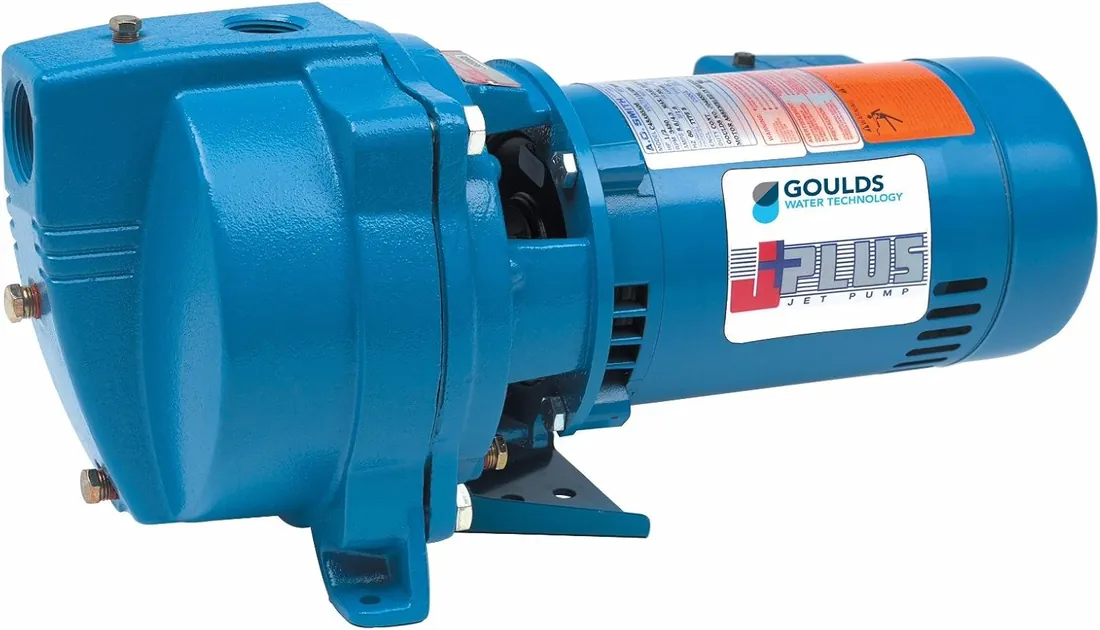
Goulds J5S Shallow Well Jet Pump
1/2 HP shallow well jet pump with a factory 30/50 psi switch.
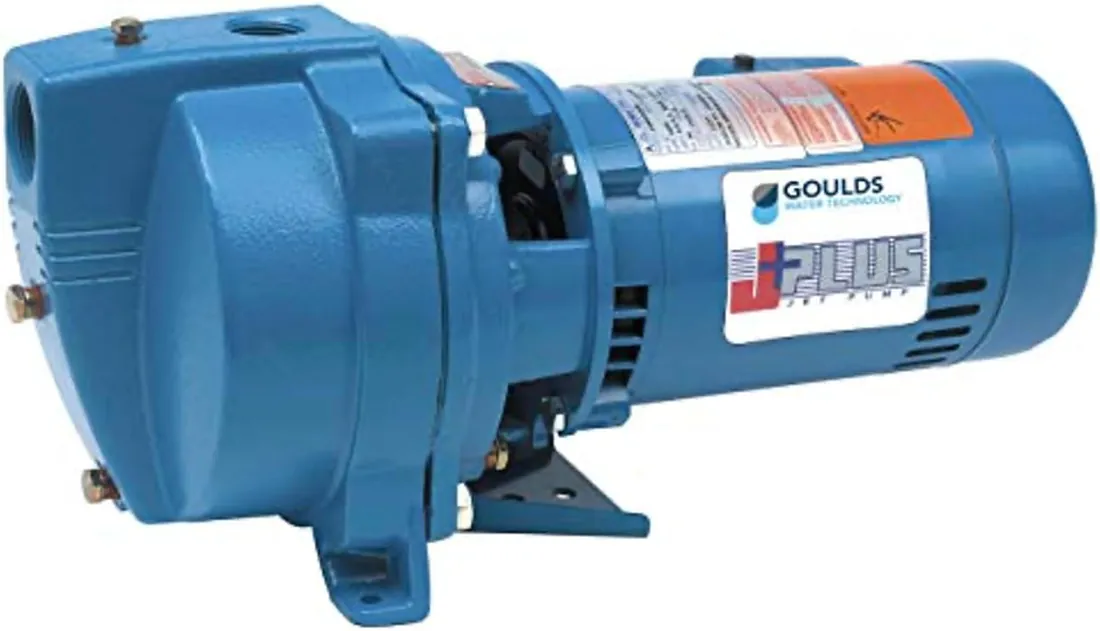
Goulds J10S 1 HP Shallow Well Jet Pump
1 HP JS-series jet pump for higher flow on shallow wells.
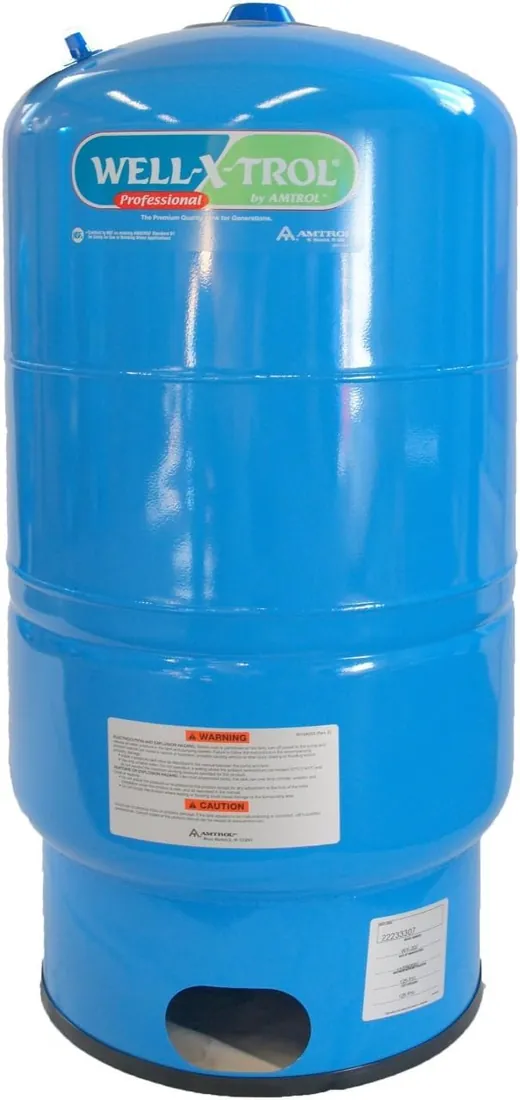
Amtrol WX-202 Well-X-Trol Pressure Tank
Diaphragm tank sized for small jet pump systems like the J5S.
Questions readers ask
Why is my Goulds pump not working?
If the motor does not run, check the breaker, wiring and voltage, and allow the automatic-reset overload to cool. If it runs but gives little water, it has likely lost prime or has an air leak in the suction pipe. Goulds' IM102 chart lists every cause.
Why won't my Goulds jet pump build pressure?
Goulds lists lost prime, air leaks in the suction, a plugged nozzle, venturi or impeller, low voltage, system head too high and excessive suction lift. Check for air leaks and clean the jet before replacing parts.
What pressure switch setting does a Goulds J5S use?
Goulds presets the JS series switch to 30/50 psi. Set the tank precharge 2 psi below the cut-in, which is 28 psi for that setting, and always check it with the tank drained and the pump off.