If a Square D pressure switch is not turning the well pump on, check for power at the switch's line terminals, then look for a tripped low-pressure lever on models that have one. If both are fine and pressure is below cut-in, the contacts or diaphragm may have failed. Keep the tank precharge 2 psi below the cut-in pressure, or the switch will chatter.
Square D and Telemecanique: the same switch
The 9013FSG2 Pumptrol switch is the same product whether the box says Square D or Telemecanique. The part number tells you the factory setting. Telemecanique's data sheet for the 9013FSG2J24 lists a 40 to 60 psi setting, and the FSG2J21 is the 30 to 50 psi version that Square D sells in retail packs. Some variants add options: the data sheet for the 9013FSG2J21M4 version describes a low-pressure cut-off that operates roughly 10 psi below cut-in.
The ratings that matter for a home well are in the table. The switch handles a 1.5 hp motor on 115 V single phase and 2 hp on 230 V single phase, uses a double-pole snap-action contact set, and is listed for fresh water.
| Rating | Value |
|---|---|
| Factory setting | 40 to 60 psi |
| Adjustable range on rising pressure | 137.9 to 448.2 kPa |
| Adjustable differential | 103.4 to 206.8 kPa |
| Motor rating, single phase | 1.5 hp at 115 V, 2 hp at 230 V |
| Contacts | 2 NC, snap action, DPST |
| Pipe connection | 1/4 in NPSF internal |
| Electrical durability | 100,000 cycles, under 10 cycles per minute |
| Fluid | Fresh water, 32 to 158 °F |
| Warranty | 18 months |
How the pressure switch controls the pump
The switch watches system pressure through a rubber diaphragm on a short pipe nipple. When pressure falls to the cut-in point, the contacts close and the pump starts. When the pump refills the tank and pressure reaches cut-out, they open. Pentair's pressure switch instructions spell out the relationships: cut-out should be at least 5 psi below the pump's dead-head pressure, cut-in is typically 20 psi below cut-out, and the tank's air precharge sits 2 psi below cut-in.
That last figure is the one that most often goes wrong. Red Lion's tank guide gives the same rule with examples: 18 psi for a 20 to 40 switch, 28 psi for 30 to 50 and 38 psi for 40 to 60. A tank with too little air makes the switch cycle the pump rapidly.
Adjusting cut-in and cut-out
Two-post switches like the 9013FSG2 have a large nut that moves both settings together and a small nut that changes only the cut-out. Pentair's instructions, written for its own two-post switches, say each full turn of the main nut changes pressure by about 2-1/2 psi, clockwise to raise and counterclockwise to lower. Turning the small nut clockwise raises only the cut-out and widens the gap.
Pentair also sets limits for its jet pumps: never cut-in below 20 psi or cut-out above 60 psi. Your pump's maker may differ, so check its manual. After any change, drain the tank and reset its precharge to 2 psi below the new cut-in.
- Switch off power to the pump at the breaker.
- Remove the cover and confirm the contacts are not live.
- Turn the large nut in small steps to move both settings.
- Turn the small nut only if you need a wider differential.
- Refit the cover, restore power and read cut-in and cut-out on a gauge.
- Reset the tank precharge to 2 psi below the new cut-in.
Square D switch not turning the pump on
Red Lion's troubleshooting guide lists the two basic reasons a jet pump motor will not start: no power reaching the pressure switch, from a blown fuse, open switch or loose connection, and a pressure switch that has not closed. Work in that order. With power off, check that the breaker has not tripped and the wiring is tight; an electrician can then measure voltage at the line terminals.
If voltage is present but the contacts stay open below cut-in, the switch may be stuck. On low-pressure cut-off models, check the side lever first. The data sheet names its AUTO, START and OFF positions: if pressure fell too far, for example after a long draw or a lost prime, the switch locks out until you move the lever to START and pressure builds. Fix the reason pressure dropped before relying on it again.
If neither applies, the contacts may be burned or the diaphragm or its nipple clogged. Red Lion's remedy for a faulty switch is simply to replace it,, which is usually quicker than cleaning burned contacts or a clogged diaphragm.
Rapid cycling, chattering and not shutting off
Rapid cycling usually points to the tank, not the switch. Red Lion lists a waterlogged tank, wrong precharge, an air leak, a leaking check valve and a pressure switch mounted too far from the tank; it asks for the switch within one foot of the tank. Chattering contacts at cut-in often mean the same thing, because pressure bounces as the pump starts.
A switch that never shuts the pump off may have a cut-out set above what the pump can reach. Pentair's rule of keeping cut-out at least 5 psi below dead-head pressure exists for this reason. Red Lion adds that low voltage makes a pump run slowly and weakly, so it may never reach cut-out. Leaking drop pipe in a submersible system has the same effect.
Replacing or choosing a switch
Match the pressure range to the system and the motor rating to the pump. A 30 to 50 psi Square D FSG2J21CP suits most homes; a 40 to 60 psi Telemecanique 9013FSG2J24 suits higher pressure systems if the pump can deliver it. The data sheet shows the terminals labeled L1, L2 for the incoming line and T1, T2 for the motor, and screw clamps that take up to 10 AWG wire. Have an electrician wire it if you are unsure, and see the shallow well jet pump list if the pump itself is the problem.
Common mistakes
- Adjusting the switch without resetting the tank precharge afterward.
- Setting cut-out higher than the pump can reach, so it never shuts off.
- Mounting the switch far from the tank on a long line.
- Working inside the cover with the breaker still on.
- Replacing the switch when a waterlogged tank was causing the cycling.
Products that fit
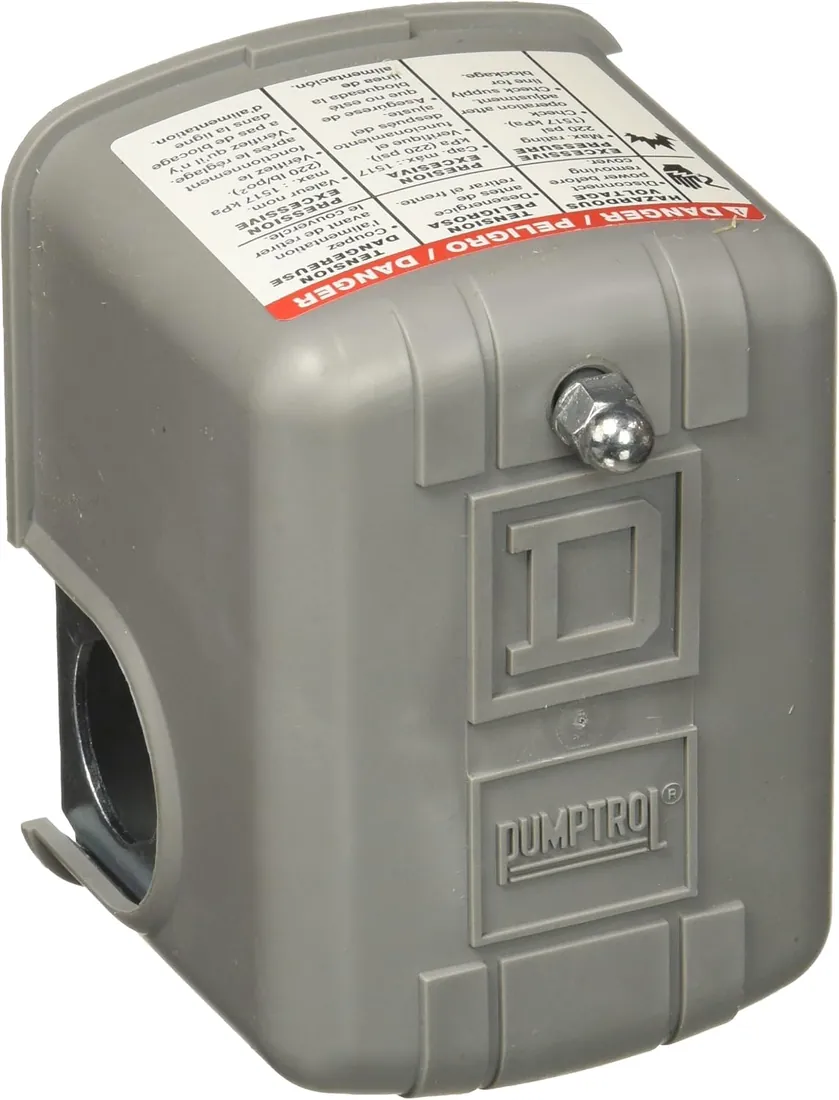
Square D FSG2J21CP 30/50 PSI Pressure Switch
30 to 50 psi Pumptrol switch, the common setting for household wells.
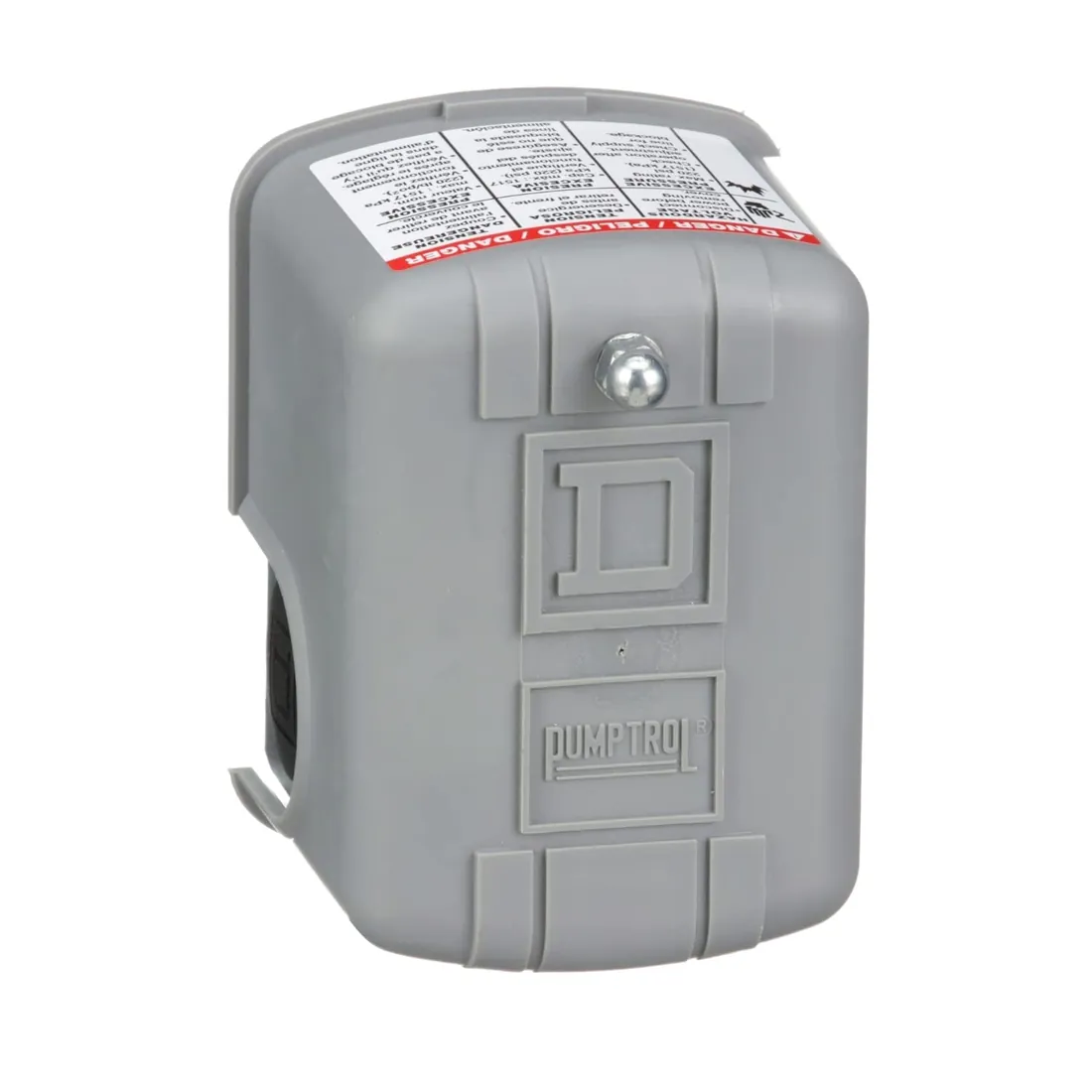
Square D 9013FSG2J24 40/60 PSI Pressure Switch
40 to 60 psi version rated 1.5 hp at 115 V and 2 hp at 230 V.
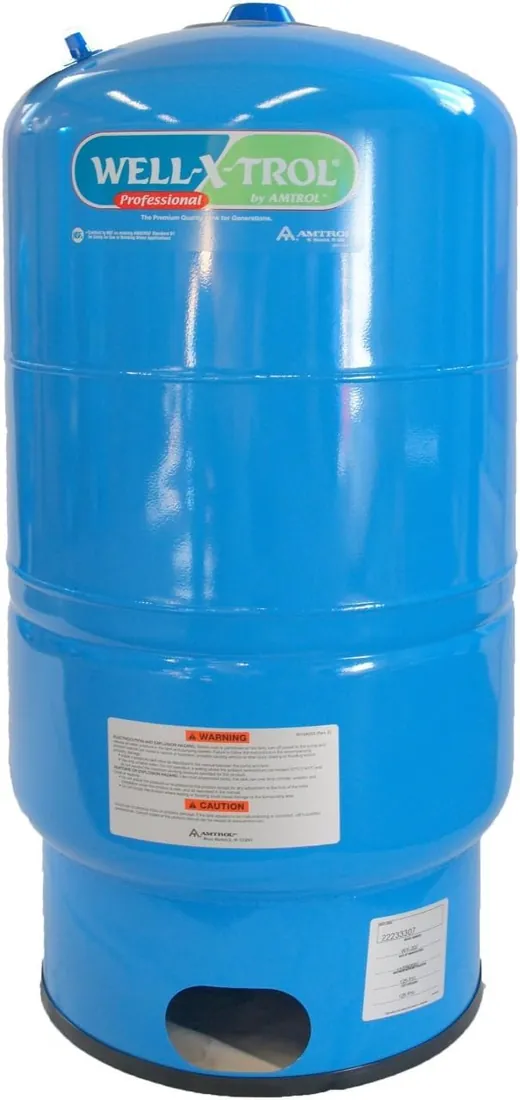
Amtrol WX-202 Well-X-Trol Pressure Tank
Diaphragm well tank whose precharge must sit 2 psi below cut-in.
Questions readers ask
Does a Square D pressure switch have a reset button?
Standard 9013FSG2 switches do not. Versions with the low-pressure cut-off option have a lever with AUTO, START and OFF positions; if pressure drops too far it locks the pump off until the lever is moved to START.
How do I adjust a Square D pressure switch?
With power off, turn the large nut to move cut-in and cut-out together and the small nut to change only cut-out. Pentair's instructions give about 2-1/2 psi per full turn. Reset the tank precharge afterward.
Why does my well pump click on and off quickly?
Usually the pressure tank has lost its air charge or is waterlogged. Red Lion also lists a leaking check valve, an air leak and a switch mounted too far from the tank. Check the precharge first.