A jet pump that runs but won't build pressure has usually lost prime through an air leak in the suction pipe, a leaking foot valve, or a water level that has dropped too far. A submersible that won't reach cut-out may have a leaking drop pipe, low voltage or a well that cannot keep up. Pressure that drops with no water running points to a leak.
Start at the pressure gauge
The gauge next to the pressure tank tells you which problem you have. With all taps closed, watch it through one pump cycle. If the pump runs and the needle climbs slowly or stalls short of the cut-out, the pump is not producing enough pressure: a source, prime or pump problem. If the pump reaches cut-out and stops, but the needle then sinks with nothing running, water is leaking backward or out somewhere. If the needle swings rapidly between cut-in and cut-out every few seconds of use, the tank has lost its air cushion.
Write down the cut-in and cut-out readings. Wayne's shallow well pumps, for example, ship with a 30/50 switch, so a pump that stops near 40 has a different problem from one that reaches 50 and bleeds down.
- Close every tap and note the gauge reading.
- Watch the pump start, climb and stop.
- Leave the system idle and see whether pressure falls.
- Open one tap and count the seconds between pump starts.
Shallow well and jet pumps that won't build pressure
For jet pumps, the maker charts converge on prime and suction. Red Lion lists three causes for a jet pump that loses prime: air leaks in the suction line, a well drawn down too far, and a faulty foot valve. For weak output it adds plugged foot valves, nozzles and venturis, suction lift beyond the pump's rating, and low voltage. Wayne's chart for its SWS pumps says to check that the pump is primed before anything else, by unscrewing the priming plug and looking for water.
Power outages are a common trigger. When a jet pump stops, the column of water in the suction pipe is held only by the foot valve or check valve; if that valve leaks, the water drains back to the well and the pump restarts dry. After an outage, a pump that runs without building pressure usually needs repriming and a look at the foot valve. Suction lift is the other hard limit: a shallow well pump simply cannot lift from a water level that has dropped below its range. The shallow vs deep well guide explains those limits.
| Pressure | 0 ft | 10 ft | 20 ft | 25 ft |
|---|---|---|---|---|
| 30 psi | 711 | 638 | 565 | 529 |
| 40 psi | 543 | 470 | 397 | 361 |
| 50 psi | 375 | 302 | 229 | 193 |
Figures: Wayne SWS shallow well jet pump manual 640002W-001 G.
Submersible pumps that won't reach cut-out
Red Lion's chart for its submersibles lists the reasons a pressure switch never shuts the pump off. Low voltage makes the motor run slowly, giving low pressure and high current. A faulty switch may fail to open. A leaking drop pipe lets water escape inside the well; Red Lion's test is to raise the pipe one length at a time until water stands in it, which marks the leak. And the water level may fall too low while the pump runs.
That last one is a well problem, not a pump problem. Red Lion's remedy is to lower the pump further into the well, keeping it at least 5 ft above the bottom, and to fit a control valve between pump and tank to throttle the flow until it does not exceed the well's recovery rate, with a relief valve able to pass full pump flow at 75 psi. Its convertible jet chart says the same in another form: a pump that runs hot and won't shut off cannot build pressure for lack of water, and a low-pressure cut-off switch will protect it. For new or replacement submersibles, the deep well submersible list compares options.
Pressure drops with no water running
When the pump reaches cut-out and the gauge then slides down with every tap closed, water is going somewhere. If there is no visible leak in the house, it is going back down the well. On a jet pump, that means a leaking foot valve or check valve; Red Lion lists a foot valve that leaks or is stuck open among the reasons a pump starts too often. On a submersible, the built-in check valve in the pump or any check valves in the line can leak, and so can the drop pipe.
Toilets that run quietly, outdoor hose bibs and irrigation lines are worth ruling out first. Red Lion's suggestion for the tank and plumbing is soap solution on the connections to find air leaks, and a visual check of the plumbing for water leaks.
Tank and switch problems
A pressure tank that has lost its air makes pressure swing fast and the pump cycle constantly. Red Lion lists a waterlogged tank, an incorrect switch setting, and a switch too far from the tank, with the fix of moving the switch to within one foot of the tank. Precharge should be 2 psi below cut-in with the tank empty: 28 psi for a 30/50 switch, 38 psi for 40/60.
Amtrol adds an important warning: if a tank has lost its precharge or the pump now cycles faster than when the tank was new, do not simply pump it back up, because the loss can mean internal corrosion and repressurizing can make it burst. That is a replacement case. The pressure tank guide and the pressure switch guide cover setting both correctly, and the Amtrol WX-202 is a common replacement size.
A new pump that won't build pressure
On a new jet pump, prime and suction plumbing are almost always the cause. Wayne's chart lists the discharge not vented while priming, a leak in the suction pipe, undersized piping, the wrong jet for the depth, and a pump too small for the job. Open a tap while priming so air can escape, and keep filling the pump. Wayne advises pausing every five minutes while priming to let the pump body cool.
On a new submersible, check that the pump was wired for the right voltage and, on models with a control box, that the box matches the motor. If the pump was chosen without reference to the depth to water and the pressure needed, it may simply be undersized; compare its performance table at your water level with the cut-out pressure. The shallow well jet pump list shows maker flow tables for common models.
Common mistakes
- Pumping air back into an aging tank whose precharge has leaked away.
- Raising the switch setting when the pump cannot reach the current one.
- Repriming repeatedly without fixing the leaking foot valve.
- Running a jet pump dry for long periods while it tries to prime.
- Lowering a submersible to the very bottom of the well.
Products that fit
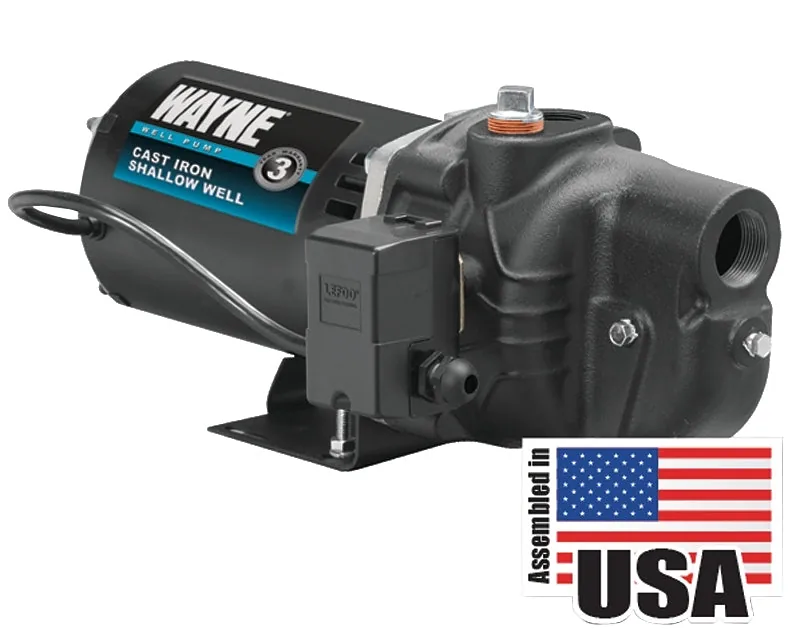
Wayne SWS50 Shallow Well Jet Pump
Shallow well jet pump whose maker table shows flow falling with depth and pressure.
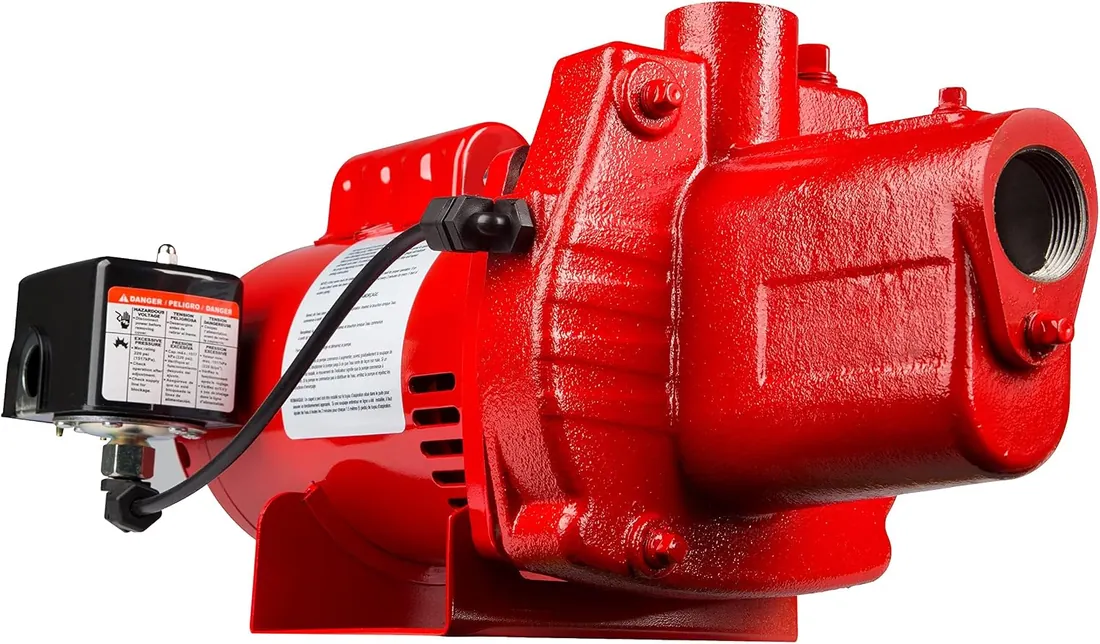
Red Lion RJS-50-PREM Shallow Well Jet Pump
1/2 HP cast iron shallow well jet pump with a Red Lion troubleshooting chart.
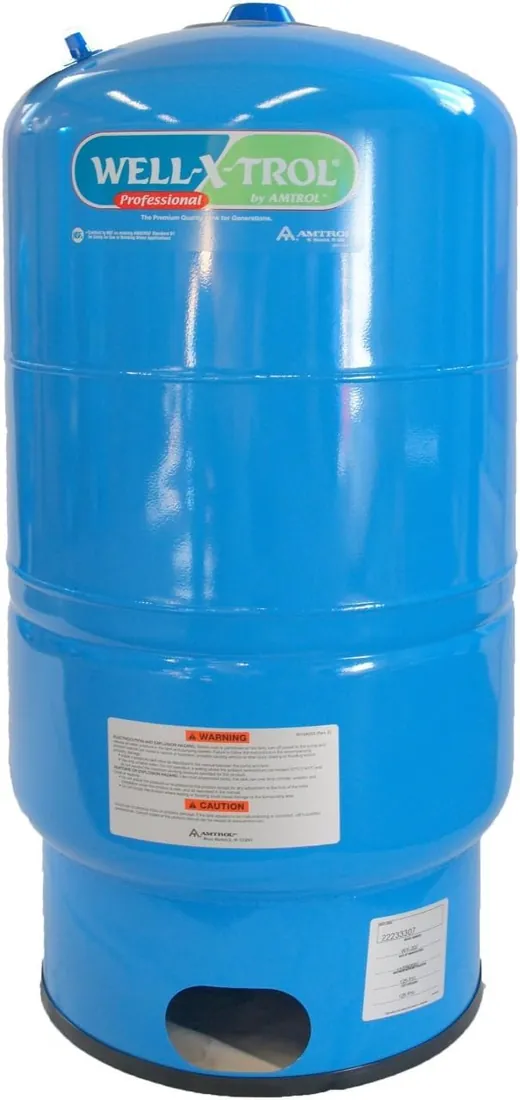
Amtrol WX-202 Well-X-Trol Pressure Tank
Replacement well tank when the old one has lost its air.
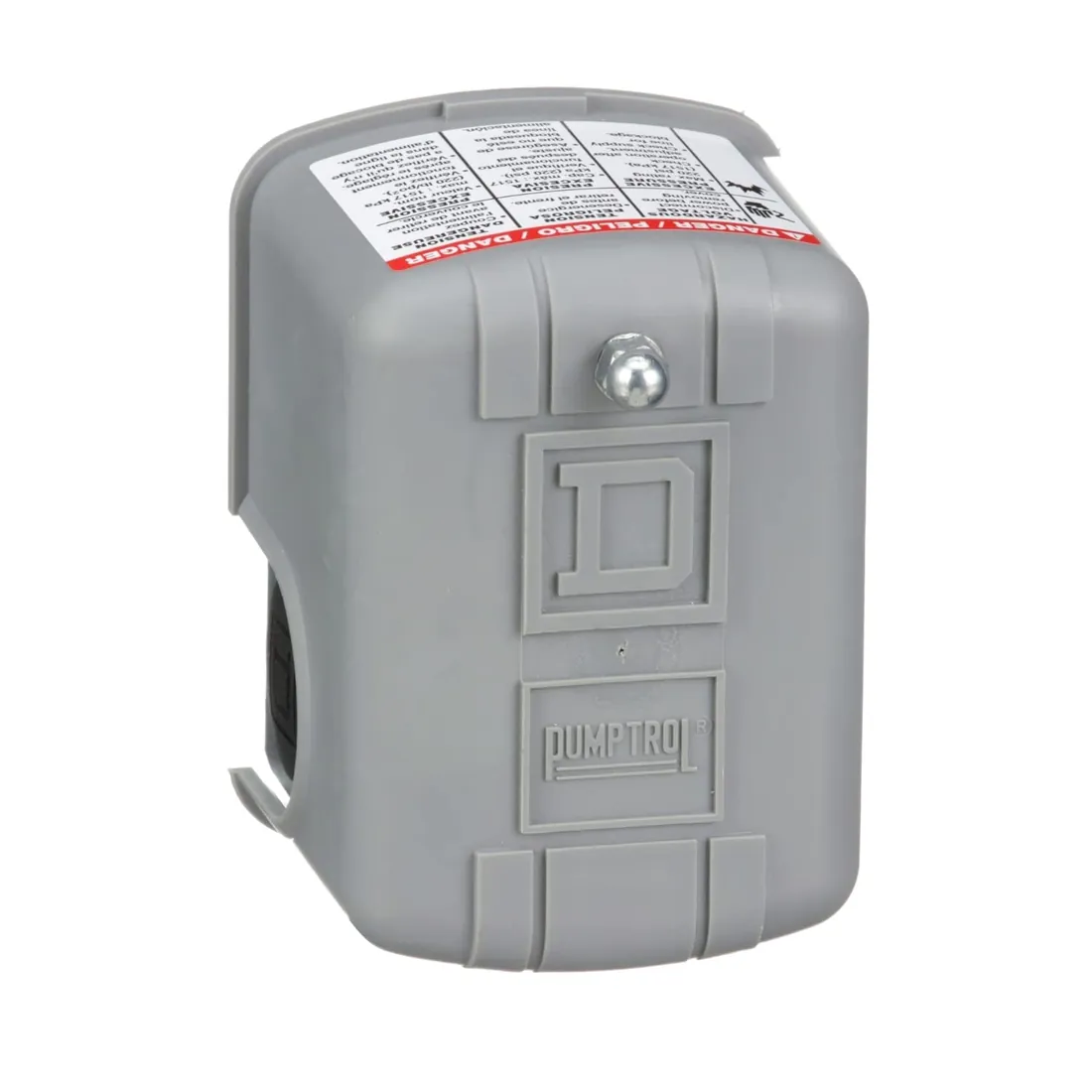
Square D 9013FSG2J24 40/60 PSI Pressure Switch
Replacement pressure switch when contacts or sensing port have failed.
Questions readers ask
Why does my well pump lose pressure after a power outage?
On a jet pump, the water in the suction pipe drains back when the pump stops if the foot valve or check valve leaks, so the pump loses prime. Reprime it and inspect the foot valve. On a submersible, check the breaker and the pressure switch first.
Why does my well pressure tank keep losing pressure?
If the water pressure drops with no taps open, water is leaking back or out: a foot valve, check valve or plumbing leak. If the air precharge itself is low, the tank's membrane or shell may be failing, and Amtrol warns against simply re-adding air.
Why does my well pump run but not reach 50 psi?
It may not be able to at your water level, the jet or nozzle may be plugged, the suction line may leak air, or the voltage may be low. Wayne's SWS50 table shows output at 50 psi falling sharply as the water gets deeper.
How far from the bottom of the well should a submersible pump sit?
Red Lion says at least 5 ft above the bottom. If the water level drops too far while pumping, lower the pump within that limit and throttle the discharge so the flow does not exceed the well's recovery.