When a sewage ejector stops, check power and the breaker first, then stop using the fixtures that drain to it. Most failures come from a float caught on the basin or piping, wipes or rags jamming the impeller, or a stuck check valve. If the alarm sounds, the water is above the pump's on level: something has stopped the pump from keeping up.
First steps when the alarm sounds
Liberty notes that the Uniform Plumbing Code calls for sewage systems to have an audible and visual alarm, and that alarm is your early warning. When it sounds, stop running water into the basin: no flushing, showers, laundry or sinks on that line. Every gallon you add has to be pumped or it backs up.
Then check whether the pump has power. Look at the breaker, any GFCI and the plug or piggyback switch connection. Never open a sewage basin or reach in while the pump is powered. Liberty warns not to enter a basin that has been in use, since sewage gases are poisonous, and asks for protective gloves and eyewear because the contents can carry disease.
Pump will not start or will not pump
If the motor is silent with power present, the float is the usual suspect. Sewage floats ride on a tether or rod and can catch on the basin wall, the inlet pipe or the discharge, and grease can coat them. Wayne asks for at least 1 in of clearance between float and basin wall and wants the cord and tether tied to the discharge pipe so they cannot tangle.
If the motor hums or runs but the level does not drop, suspect a blockage. Zoeller's service checklist lists a mechanically bound impeller, a clogged strainer or discharge, a stuck check valve and air entering the pump. Liberty's manual is blunt about the cause of many jams: only toilet paper should go into a non-grinder sewage pump, and wipes, towels, dental floss and feminine products put it under strain and can block the discharge line.
A pump that runs against a closed gate valve, or a check valve fitted backward, also moves nothing. Wayne lists both in its chart for a pump that runs but delivers little or no water.
Pump keeps running or will not shut off
Constant running has three common causes. The float is stuck up, held by debris or the basin wall. The discharge is partly blocked, so the pump cannot lower the level enough to reach the off point. Or water is coming back: a leaking check valve lets the discharge column fall back into the basin, which Wayne and Liberty both name. Liberty adds that a pump running when no fixtures are in use points to a leaking check valve or a leaking fixture, such as a running toilet.
Zoeller states that a check valve is required in every sewage system, and Wayne requires one too. Its job is far more important here than on a sump pump, because what falls back is waste.
- Stop using fixtures on the line and switch off power at the breaker.
- Listen for running toilets or dripping fixtures upstream.
- Check that the float moves freely and is not hung on piping.
- Inspect the check valve above the union for sticking or leaks.
- Restore power and watch one complete cycle with a little water.
Pump keeps tripping the breaker
A sewage pump that trips its breaker is usually working too hard or has an electrical fault. Zoeller's checklist for a motor that overheats and trips its overload or blows a fuse names incorrect voltage, an impeller or seal bound mechanically, a defective capacitor and a shorted motor. A jammed impeller draws high current as it tries to turn, so a breaker that trips the moment the pump starts often means a solid is wedged in the pump.
The thermal overload in the motor resets itself, so a pump may also shut off and restart unexpectedly. Wayne lists low head, high or low voltage and poor wiring as reasons a protector trips. If the breaker trips with the pump unplugged, the problem is in the wiring, not the pump; call an electrician.
Switch levels and basin sizes to compare
When you replace a sewage pump, compare the switch levels with the old one. A pump that starts higher lets more waste collect before each run, which is fine in a large basin but can let water reach the inlet in a small one. The figures below come from each maker's documents. Never set an off level lower than the maker allows, since the remaining water keeps the motor cool.
| Pump | Power | On / off level | Minimum basin |
|---|---|---|---|
| Zoeller M267 | 1/2 HP | 12 in / 4 in | 18 in by 30 in, simplex |
| Wayne RPP50 | 1/2 HP | About 16 in / about 7.5 in | 18 in across, 24 in deep |
| Liberty LE51AV | 1/2 hp | 11 in / 5.5 in | 18 in across, 24 in deep |
Figures: Zoeller technical data sheet FM2789, Model 267; Wayne sewage pump manual 610001W-001 G; Liberty LE50 series installation manual 7034000N.
Keeping a sewage ejector working
Most sewage pump calls are preventable. Post a note in the basement bathroom that only toilet paper goes down the toilet. Keep grease out of sinks on that line. Wayne asks for an inspection three to four times a year and a new tether switch every two years. Keep the vent clear: Wayne and Liberty both require the basin to be vented, which also lets the system drain properly.
If yours is beyond repair, the Zoeller M267 handles 2 in solids, and the Wayne RPP50 is another 1/2 HP option. The sewage ejector pump list compares more, and grinder pumps suit lines that see wipes despite everyone's best efforts.
Common mistakes
- Continuing to flush and shower while the high water alarm is sounding.
- Reaching into the basin with the pump still powered.
- Flushing wipes, towels or feminine products into a non-grinder pump.
- Replacing the pump without checking the check valve and vent.
- Ignoring a running toilet that keeps the pump cycling all day.
Products that fit
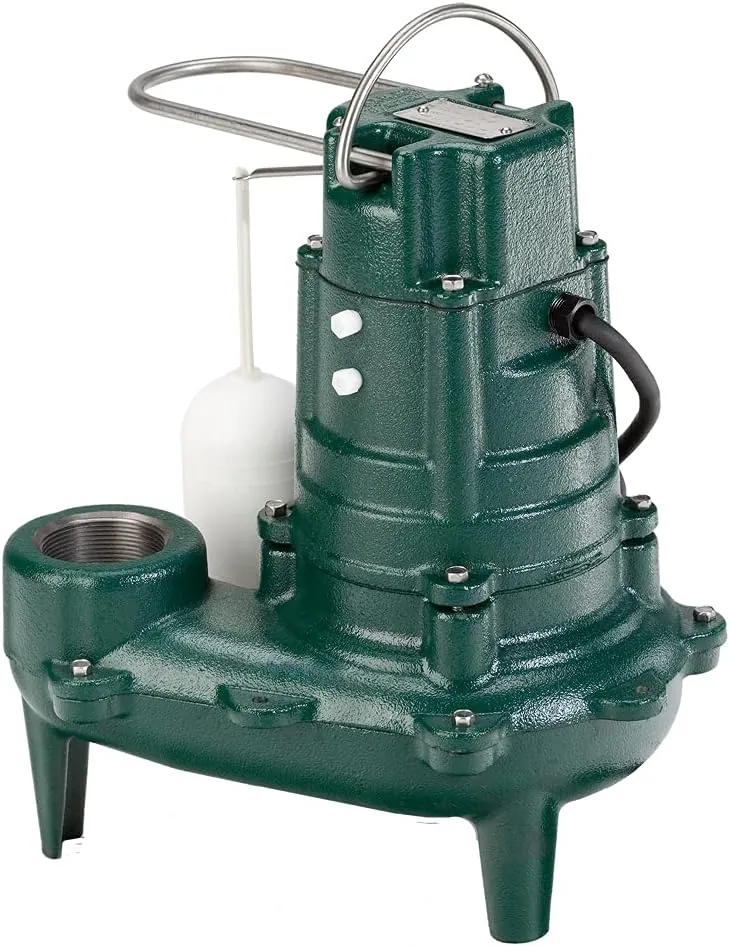
Zoeller M267 Waste-Mate Sewage Pump
1/2 HP cast iron sewage pump with 2 in solids handling and a 12 in on level.
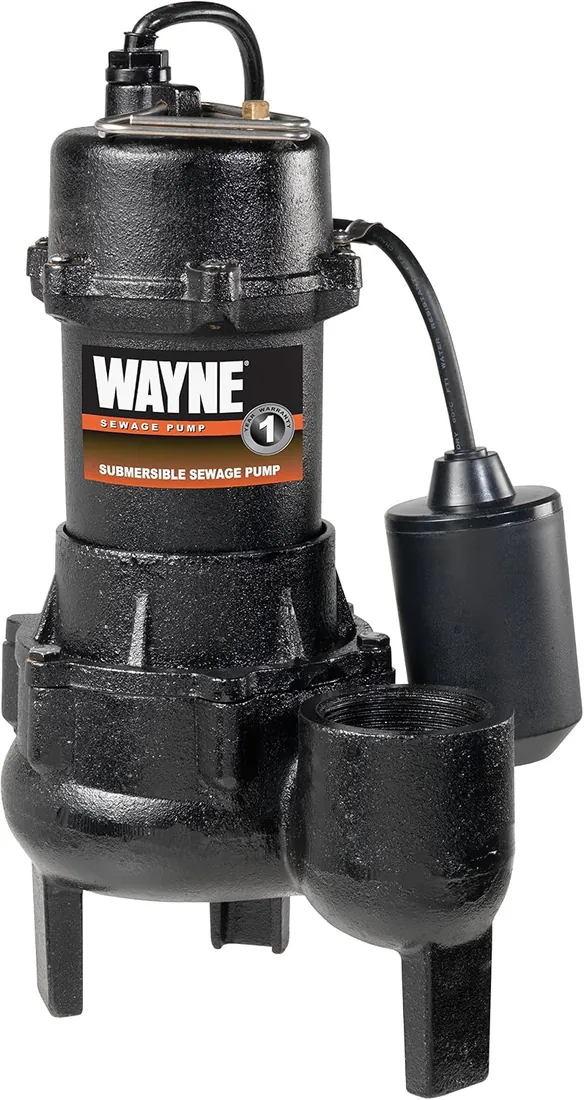
Wayne RPP50 Sewage Pump
1/2 HP sewage pump with a tethered float switching on at about 16 in.
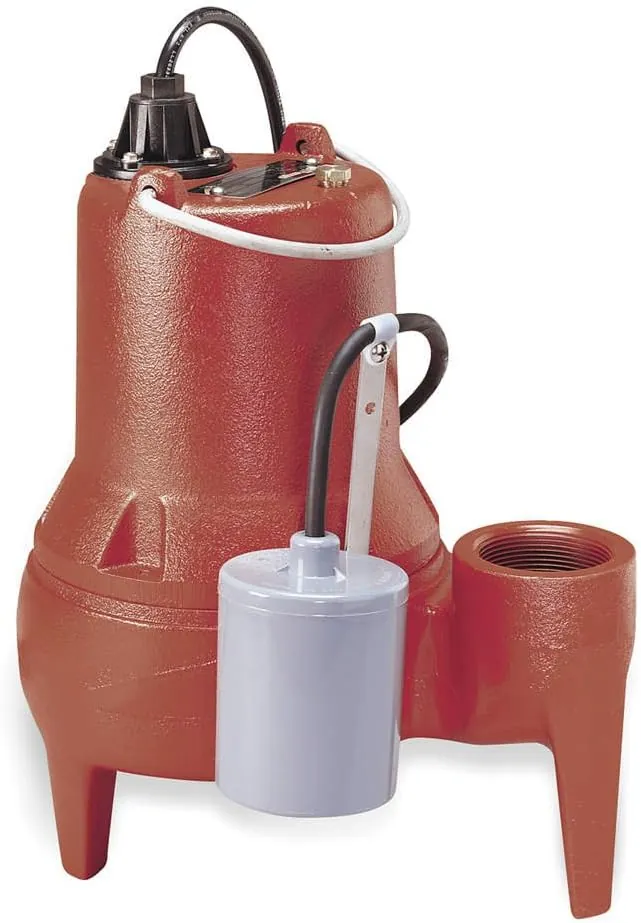
Liberty Pumps LE51A Sewage Pump
1/2 hp sewage pump from Liberty's LE50 series for residential basins.
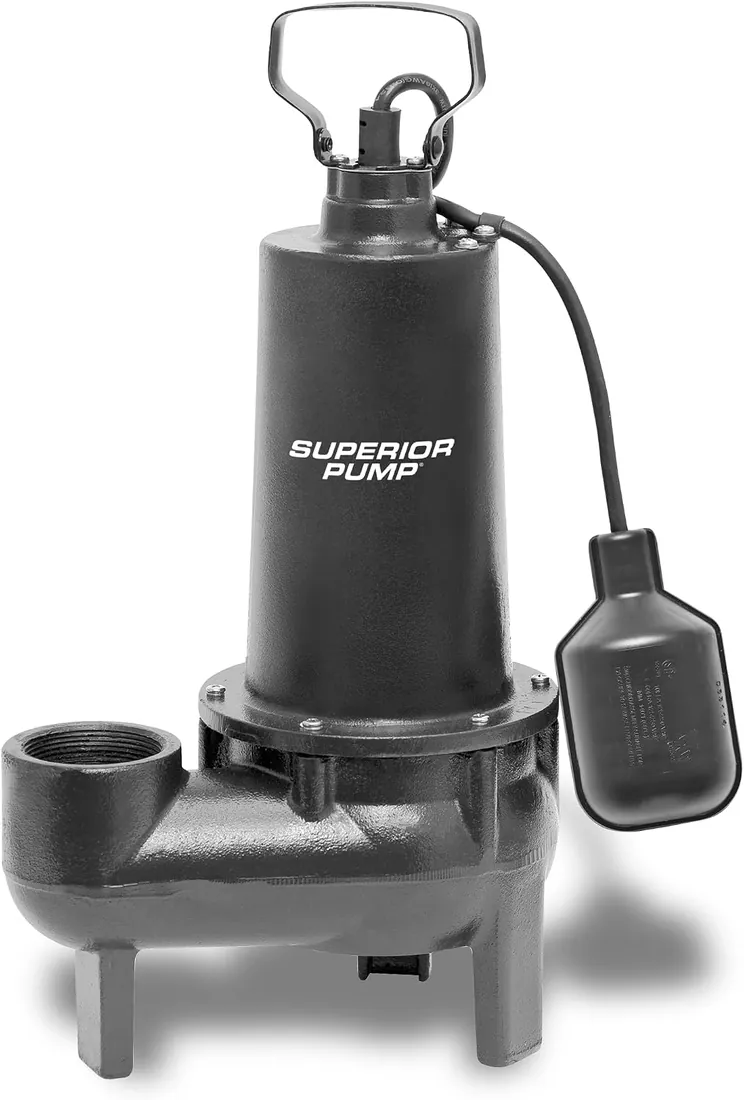
Superior Pump 93501 Cast Iron Sewage Pump
Cast iron sewage pump alternative for a standard residential basin.
Questions readers ask
What should I do when my sewage ejector alarm goes off?
Stop using every fixture that drains to the basin, then check power to the pump: breaker, GFCI and plug. If it has power but is not lowering the level, the float, impeller or check valve needs attention, often by a plumber.
Why does my sewage pump keep running?
A float stuck in the on position, a partly blocked discharge or a leaking check valve that lets waste fall back are the common causes. A running toilet upstream can also keep it cycling.
Is there a reset button on a sewage pump?
The motors described here use an automatic thermal overload that resets itself after cooling. The resets you control are the breaker and any GFCI, plus the alarm's silence button. Repeated trips need a diagnosis.